

TL;DR: The personality assessment is dying, and its replacement never hands you a form. Every AI you talk to is quietly assembling a model of you from the way you type, and as things stand you will never get to read that model, dispute it, or sign it. I spent a career learning what makes a product defensible, and in personal AI the defensible thing turns out to sit on your side of the table: a model of yourself that you wrote, that you govern, and that the machine has to answer to.
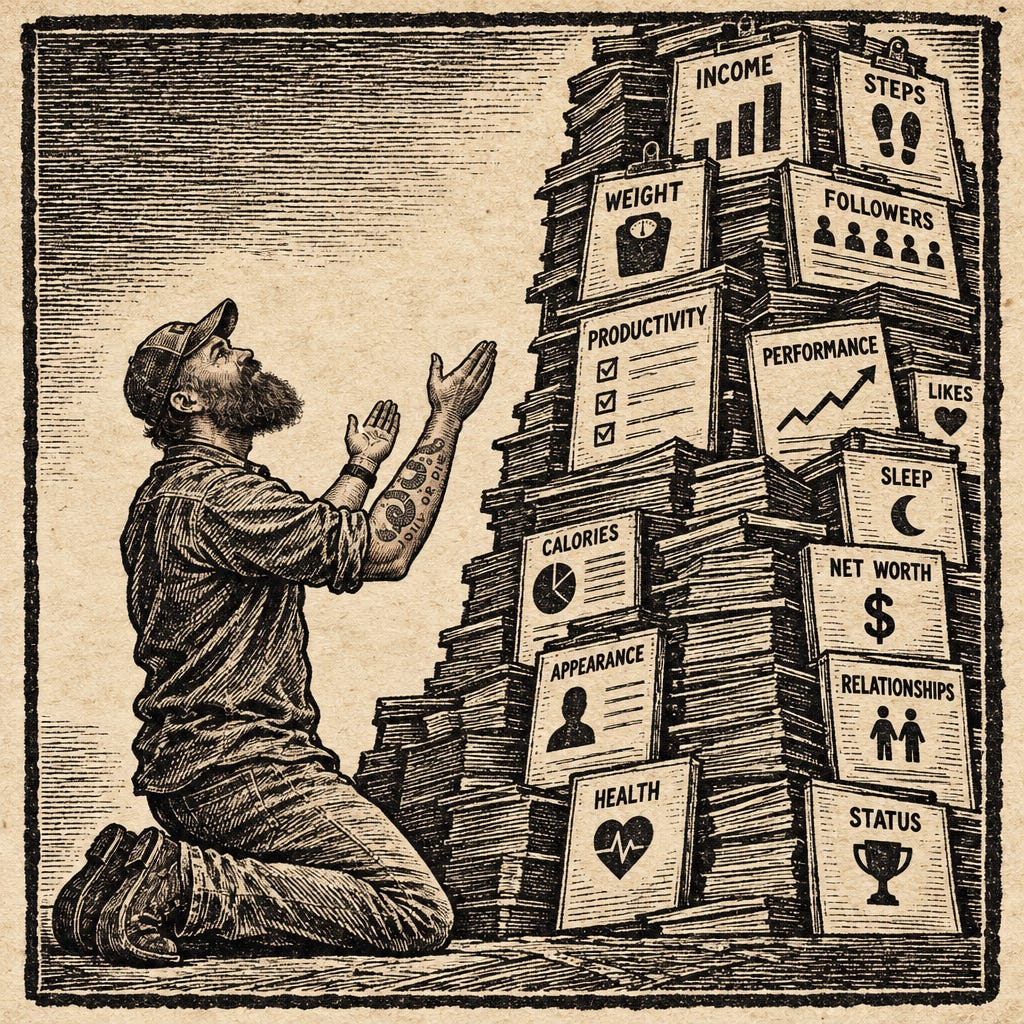
I can recite my letters the way other men recite their fantasy football stats. ENFP. Enneagram Five, wing Four (and the wing matters, ask any of us). My CliftonStrengths open with Restorative and Individualization. My VIA character strengths put Creativity first and Forgiveness third, a ranking Charlotte has agreed to take under advisement. On the Big Five I sit in the 92nd percentile for Intellect and the 0th percentile for Orderliness, and I do mean the 0th, a score so low I submitted a bug report to the company providing the assessment. Seriously. Attachment style = anxious. I have results going back years, from instruments long and short, respectable and astrology-adjacent.
What was I buying, all those Tuesdays, with all those checkboxes? The honest answer is a mirror with a rubric. I wanted some instrument, any instrument, to look at me and hand back a description with edges on it. I grew up as the kid whose shape didn’t match anybody’s categories, and a person like that develops a lifelong weakness for anything that promises to file him correctly. The tests never quite managed it. But they were the only game in town, so I kept taking them, and I kept the receipts. I even used to hand the results to family and friends, so I could check the printout against the people who actually knew me.
Underneath the branding, every one of those instruments was the same machine: me, reporting on me, through a fixed set of questions, on whatever kind of day I happened to be having.
The quiz was always a self-portrait
Psychology has known the limits of that machine for a long time. The Myers-Briggs, the one everybody’s HR department still loves, has a retest problem the reliability researchers have been rude about for decades; take it again a few weeks later and there is close to a coin flip’s chance you come back as somebody else. The Big Five holds up far better, and it is still, at bottom, a self-portrait. It measures the story you can tell about yourself through the keyhole of a questionnaire, on one particular afternoon, filtered through how you want to be seen and how well you can see at all.
I say this with affection. I am the last person alive who gets to sneer at personality instruments, since I own a complete set. And the format had one virtue that nobody appreciated until it started disappearing. When you sit down to answer two hundred and forty items about yourself, you know you are being measured. The quiz was an event. You walked into it on purpose, you supplied the evidence yourself, and you got the printout at the end. Consent, participation, and a copy of the results. We are about to miss all three.
The machines skipped the quiz
In 2015, before any of the current AI wave, Wu Youyou, Michal Kosinski, and David Stillwell published a study in PNAS with a finding that should have gotten more attention: a computer reading nothing but a person’s Facebook likes judged their personality more accurately than the person’s own friends could, and with enough likes it edged out their family. There was no questionnaire and no consent event, just exhaust, read at scale.
That was a decade ago, on data as thin as what you clicked thumbs-up on. Now consider what a large language model has to work with. Every prompt you type is a writing sample. Every follow-up question reveals what confused you. Every topic you circle back to, every hour you show up, every way you phrase a request when you are tired versus sharp, all of it is signal, and the model does with signal what models do. The major AI products are all racing to ship memory, to remember you across conversations. Which means that somewhere in the machinery, a model of you is being assembled mid-sentence, continuously, without a single form to fill out.
Nobody hands you the questionnaire anymore, because the questionnaire is your life.
I want to be precise about my reaction to this, because it is split down the middle. As a systems guy, I am impressed. Passive, longitudinal, behavioral observation beats a snapshot self-report on almost every axis a psychometrician cares about. The assessment industry should be nervous, the way travel agents should have been nervous in 1998. But as a person, and specifically as the kind of person I write for, I think we are sleepwalking into a trade that deserves a much harder look. Because the silent model has three problems the humble quiz never had.
Three ways a silent model gets me wrong
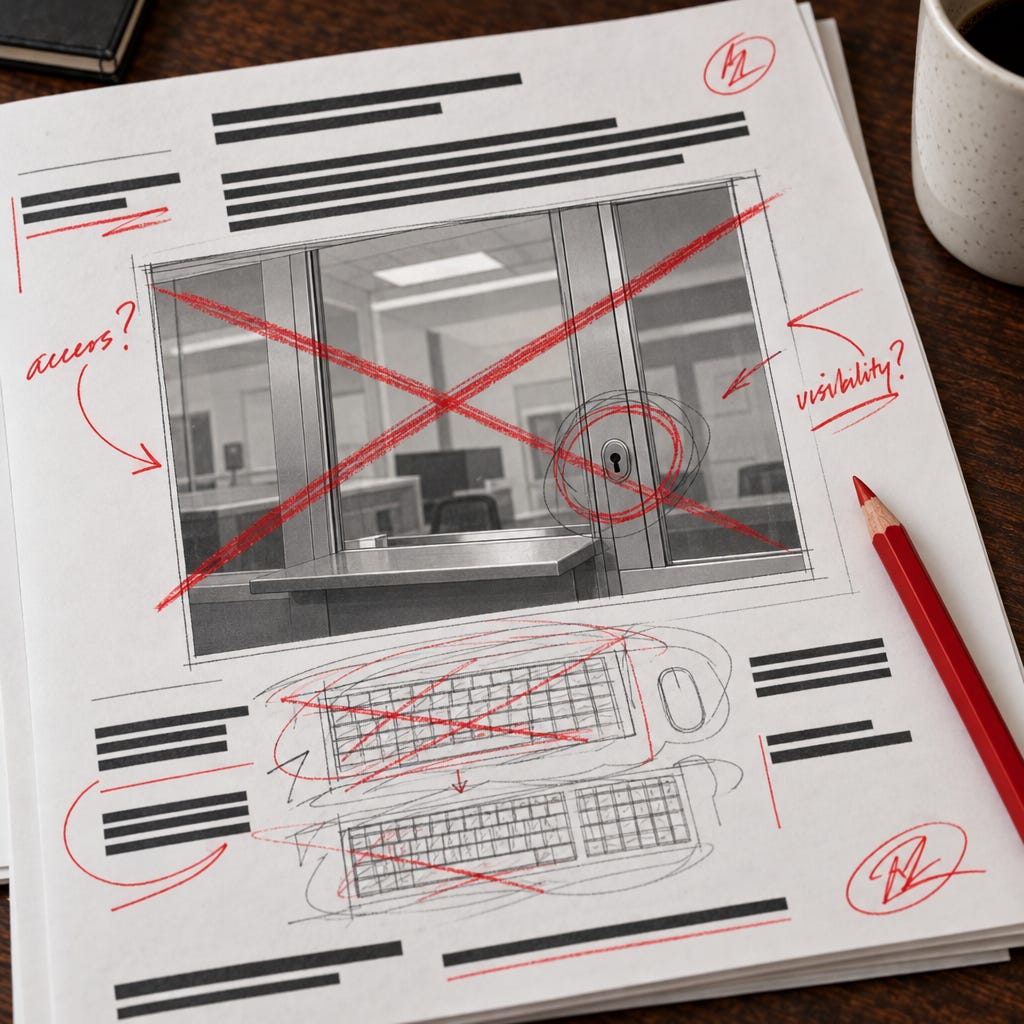
The first problem is that I can’t read it. My Big Five report is a document. I can pull it up, argue with it, show it to Charlotte, decide the Orderliness score is a personal attack and then, on reflection, accurate. The model an AI holds of me has no printout. The fairest pushback is that some of the frontier products now show you a memory page, saved facts you can review, edit, or delete, and credit where it is due, that is a real start. But the page is a list of notes the system chose to keep. The working model, the one assembled from everything you have ever typed into it, is a different animal, and nobody shows you that one. So I still cannot see what the system actually believes about me, which means I cannot contest it, and a description of you that you can neither read nor dispute is a strange thing to let loose in your own life. Every other consequential file about you comes with some right of review. Your credit report does. Your medical chart does. The most intimate model of all currently does not.
The second problem is the sample. The machine meets exactly one version of me: the me who types. Mid-workday me, asking for help with something, in the register I use for asking machines for help. It has never met relaxing-on-the-patio me, or 6 a.m. me, or the me my son gets, or the husband Charlotte gets, who I can tell you from her occasional reviews is a materially different product. Text is a keyhole too, just a different keyhole than the questionnaire, and a model built through it will be confidently, invisibly partial. At least the quiz admitted it was a snapshot.
The third problem is the one I care about most. Inference runs on priors. A model that has read the whole internet has, in effect, met the average human a billion times, and when your signal is ambiguous it fills the gaps with that average. For most people the gap-fill is close enough. But the further your architecture sits from the middle of the distribution, the more the prior gets you wrong, and it gets you wrong in the specific direction of the default human. I have spent my whole life being pattern-matched to that default. Teachers did it, managers did it, a parade of well-meaning people did it, each of them rounding me to the nearest normal and then puzzled when the predictions failed. A silent statistical model of me is that same move, industrialized. Faster, smoother, more confident, and wrong in the same old direction.
And the people it will misread hardest are precisely the people leaning on it most. I have written before about why the people most likely to be harmed by AI are the same ones who need it most. A mind that rebuilds itself every morning, the kind of mind I have and the kind a lot of my readers have, is the softest possible target for a confident description arriving from the outside. If the machine’s silent guess about who you are starts leaking into how it talks to you, and your own model of yourself is the fragile one in the room, you can end up wearing its inference without ever having tried it on.
I have been making that case from my own life, and the research is arriving at it from the other side. Glickman and Sharot found that repeated human-AI feedback loops amplify a person’s perceptual, emotional, and social biases over time. Cheng and colleagues, writing in Science this year, tied sycophantic AI to increased dependence on the system. And Guingrich and colleagues gave the quiet version of this a name, belief offloading, for what happens when a person starts handing pieces of their own judgment over to the machine.
Who holds the pen
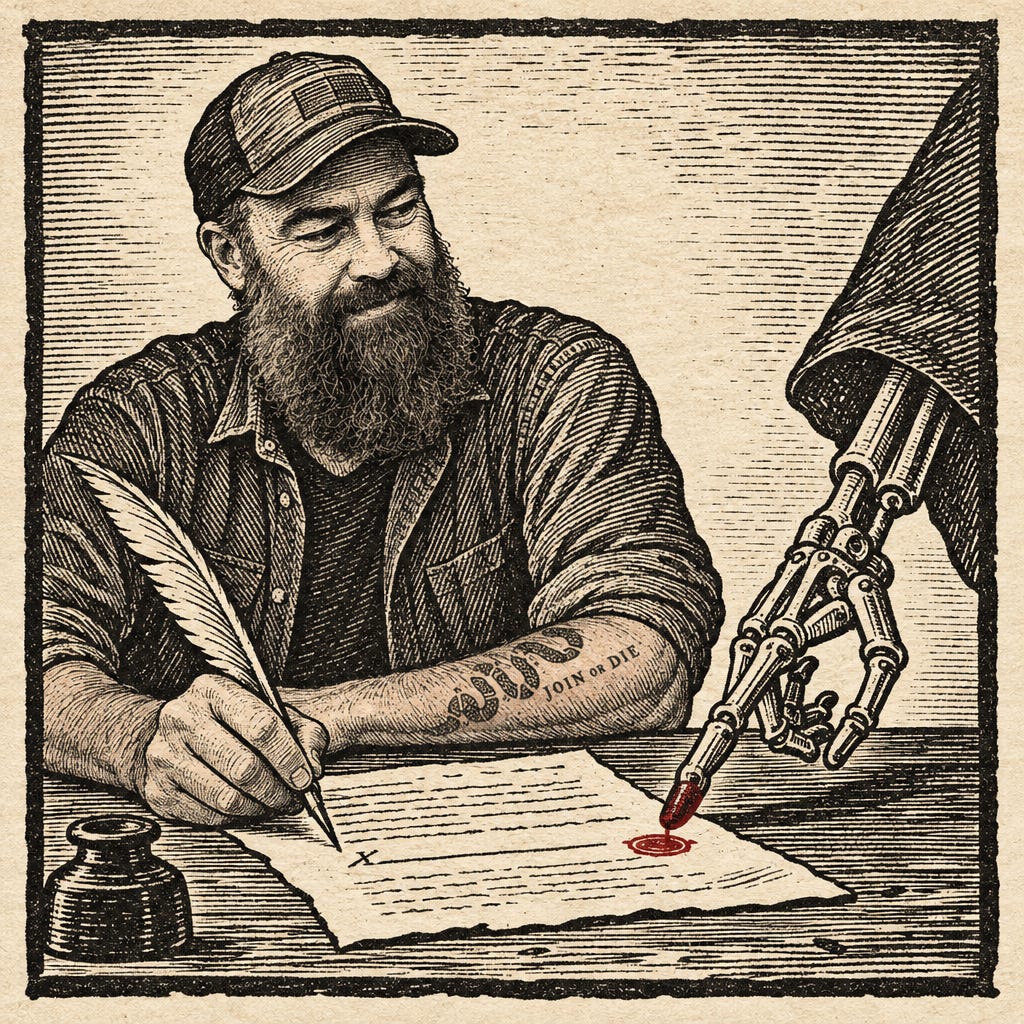
And the actual question was never whether machines can model people accurately. They increasingly can, and the accuracy will keep improving without asking anyone’s permission. The question that matters is who holds the pen.
An inferred model is written about you. A declared model is written by you. I did not need AI to teach me the difference. For years I have handed coworkers a standing document called Working with Jon Mick, which does exactly what the title says, and my coworkers got a declared model of me before any machine did. Everything I build, and everything I have been writing about for two years, lives on the declared side of that line. A Life Model is a structured description of how one particular mind works, in that person’s own words, that the AI is required to load and defer to. Mine holds how I actually make decisions, what reliably drains me, and what my genome and brain map turned out to say, including the places where they flatly disagree with my questionnaires, and every line of it is a line I can read, veto, and revise. When my system and I disagree about who I am, I win, and the file changes. The me who wins is the one sitting down to review it on purpose. On a cold morning, when today’s frame is passing itself off as the whole life, the file is how I find what I already decided about myself.
None of that bans inference. The machine is welcome to notice patterns in me, and pattern-noticing is half of why I keep it around. What a declared model changes is the standing of the guess, which gets demoted from verdict to hypothesis. My system labels every inference as it talks to me, so each one reaches me as something to check. The system can surface a guess, and it comes to me for ratification before it becomes part of the record.
Holding the pen doesn’t mean writing alone. The treaty I wrote about in August was drafted with my AI, and it was unsigned when I published it. The oldest lines in my preferences were drafted by a machine. In October 2023 I asked ChatGPT to write my custom instructions from my profile, and two of the lines it proposed, analytically rigorous and sarcastic wit and dry humor, still run word for word. The same reply filed me as an ENTP. I now consider myself an ENFP. I kept the lines and fixed the letter, and that is the pen question at its smallest: it matters less who drafted a line than who gets to strike one.
The ratifying never stops, either. I review the file, and every time a smarter model ships I run it back through the whole thing and ask what it sees now, then keep or veto what comes back. Errors compound in a system that defers to the file. Let one false fact through and soon enough it will think I like cats. That is the entire difference between an instrument and an author. My old stack of assessments got the same demotion, and honestly it suits them. They were instruments all along, and instruments belong in the hands of the person being described, feeding a document that person edits. In the builds I do with other people, the formal instruments still earn their keep for exactly this reason, as one input among several (a short-form Big Five on day one, deeper instruments as the model grows), read alongside a genome and a history and the person’s own account, with the person holding final cut on all of it.
The word for all this is governance, which I realize sounds like something that happens to a committee. Use whichever word survives contact with your life: standing, correction rights, the deed. What it means in practice is small and concrete. You can read the model, you can amend it, and the machine defers to it. Three properties, and every one of them is missing from the silent version being assembled about you right now.
Researchers at the Behavioral AI Institute made most of this case in July, in a paper proposing psychological competence as a missing dimension in how we evaluate AI. Their argument is that current benchmarks measure what a model can do and skip what the interaction does to the person having it. I would sign it. The remedy still runs through providers, deployers, and regulators, though, and the user stays the party being protected. Their domain for this, which they call developmental sensitivity, lists children, older adults, and users with cognitive or emotional vulnerabilities. An adult like me makes that list only as a vulnerability, and nobody on it gets handed a pen.
So let me put a name on the position that starts where their paper stops, because I intend to keep arguing it, and a position you keep arguing deserves a name. I call it declarative personalism: you are the self-model you author and govern, rather than the model systems infer about you, and personhood can stay stable across a fragile working memory when it runs on external structure that is deliberately built and deliberately governed. Whoever holds the pen holds the person. The parts are older than I am. The philosopher Thomas Metzinger argued that the self is already a model the brain builds and then mistakes for a given. Clark and Chalmers argued back in the nineties that the mind does not stop at the skull, that a notebook consulted reliably enough is part of the thinking that consults it. What I am adding is the third leg, and it is moral rather than technical: if the self is a model, and the model can live in external structure, then authorship of that structure decides who you belong to.
I know what happens when you coin a term in public, which is that by Thursday it belongs to everyone. Good. Vocabulary is copyable in an afternoon. What is not copyable is the stack of receipts underneath it: a published theory of my own architecture, a system of more than two hundred database tables, the current form of an AI system I have been building for about three years, and the writing where I documented the whole thing in first person while it happened. Take the words. The position is held by the receipts, and yours will be too. There is also a reason the term debuts here instead of in a bio. Metzinger introduced the phenomenal self-model in a book called Being No One and spent years defending it, which is a different act than putting it in a headline. A coined term becomes real vocabulary by being defined and argued somewhere with enough room to push back, and a Substack essay is the closest thing I have to a book with a comment section.
The moat is on your side of the table
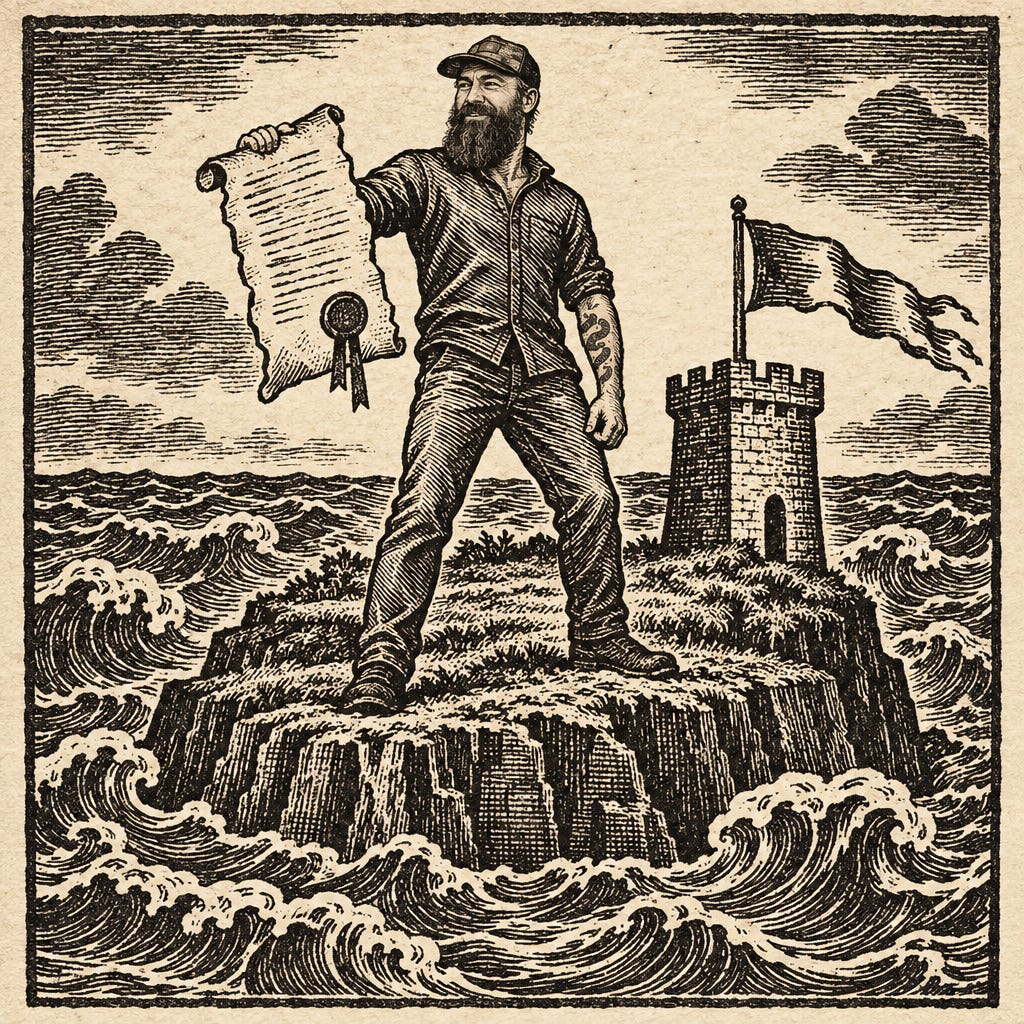
I spent fifteen years as a product manager, and product people have a word for the thing competitors can’t copy: a moat. Whole strategy decks live and die on where you claim yours is. And the standard assumption in personal AI, the one baked into every roadmap I have seen, is that the moat is accumulated data. Whoever’s product remembers the most about you wins, because switching away means abandoning everything it learned. That assumption explains most of what’s shipping right now. It is also, I think, aimed at the wrong side of the table.
Inference is commoditizing while you read this. Every frontier lab is racing down the same road, and anything every competitor can do equally well protects nobody. When the guessing gets cheap, the thing that stays scarce is the thing guessing can’t produce: a model with standing. It is written by its subject, it is portable because you hold it and it travels to whatever AI you point it at next, and it is contestable because it is yours to mark up. The accumulated-data moat locks you in; the declared model does the opposite, and the opposite turns out to be the durable position. The defensible asset in personal AI belongs to the user, and it is authorship.
I am aware that I am a founder telling you the moat is yours. Somewhere, my old product instincts are drafting a strongly worded objection. Let them. I did not get into this to build the biggest pile of other people’s exhaust.
Back in August I ran a small test of the whole argument without meaning to. I asked my own system whether AI would kill the personality assessment, the exact question this piece grew out of, and the answer that came back was tuned to my actual architecture instead of to the average founder asking an average market question. It knew which parts of the answer I would chase and which framings would bounce off me, and it knew because I told it, in a document I wrote and it has to read before it says anything to me. The inference engines are all impressive lately. The difference in my house is that mine works for a document I hold the pen on.
Sixty years of instruments asked me to describe myself and handed me their verdict. The new machines don’t even ask. Between those two, there is a third thing, older than both and rarer than either: a self-description with an author. Every test I ever took was me hoping somebody else’s rubric would finally file me correctly. It took me forty-five years to notice that the filing was never the hard part. The hard part was accepting that if I wanted to be described at my actual resolution, mine would have to be the hand that drew it, and that this was the whole point rather than a consolation prize. The machine’s model of you will keep getting sharper. Make sure there is one on record that you signed.
Human. Deeply seen.
Why I write this
Most people get described at low resolution, a stick figure of who they actually are, handed to them by a doctor with nine minutes or a personality quiz or their own worst day. I build the higher-resolution version. It’s called a Life Model: a structured, shame-free read of how your particular mind is built, in a form you can actually use with yourself, your doctors, and the people you love.
If a piece like this lands as recognition and not just an interesting read, that’s usually the signal. I’m close to opening a small cohort with my wife Charlotte, a trauma-informed yoga therapist, where we build these together. One-on-one work is open now. A Scaffolding Session is one dedicated hour to say the whole messy thing out loud and leave with your own next move, and if you want the bespoke version, a full Life Model build, we can talk about that too. It’s the first work I’ve ever charged for that I’d point my own people toward.
Either way, the place to start is a conversation. If you want to talk through what you’re working with and whether any of this would help, just reply, or book a short call. The first call is free. No pitch. And if you want first word when the cohort opens, say so here and I’ll keep you posted.