

TL;DR: A product manager’s whole job is building surfaces, the documents and diagrams and dashboards that make a messy problem visible enough for a team to act on. I did that for everyone else for two decades and never once for myself. Then I built a surface for the one mind I could never quite reach, which was my own, and it changed enough that I am now building them for the people who need them most. This is what I’m building, why, and how you get one.

The day after my birthday, ChatGPT came out. I was in the hot tub, scrolling tech news the way other people scroll vacation photos, and I started typing to this new “chatbot” half as a joke. An hour later I was still out there, pruned and a little overheated, but completely hooked.
Let me be honest about what that moment actually was, because it would be easy to inflate it into a founder origin myth. I have been building custom software since 2004, and a product manager by trade for fifteen of those years, at places like Deloitte, General Motors, Keller Williams, and The Home Depot. The whole craft comes down to one move: take a messy, invisible problem and build something a team can see, a spec, a roadmap, a diagram, a dashboard, so a group of people can finally act on the same reality. I am, in the most literal sense, a professional builder of surfaces.
I just never built one for myself.
The user was always someone else
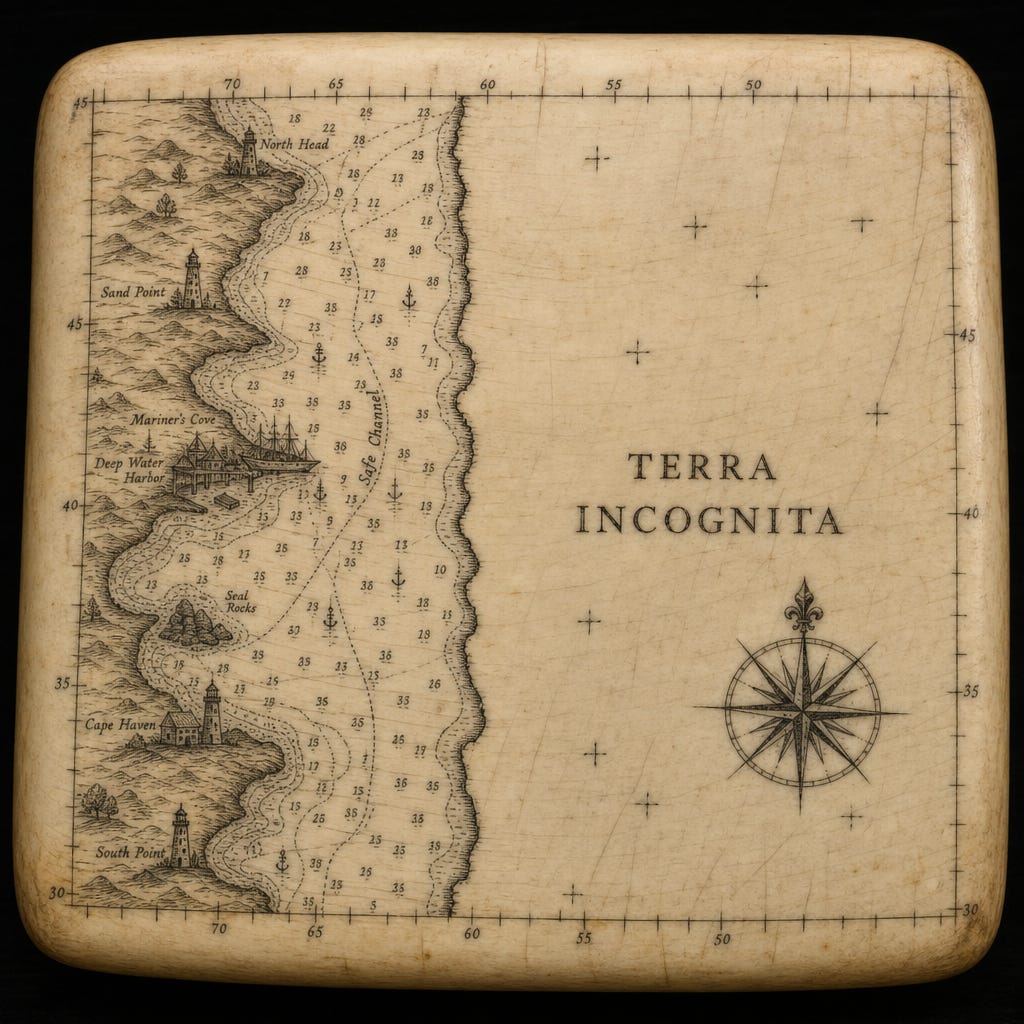
Here is the quiet joke of my career. Give me a stranger’s problem and I am genuinely good. A user persona, a backlog of complaints, three stakeholder interviews, and I can hold the whole shape of someone else’s (or a larger organization’s) chaos in my head and turn it into something you can click. I built clarity for other people for a living. So why, for the life of me, could I never build it for the one person whose problem I actually lived inside?
Because I was a man who could architect a product vision for a Fortune 50 company and could not reliably finish his own thought in the shower. The success story was real on paper, and underneath it sat a fog I could not narrate. If you have ever been the competent one who quietly suspects they are getting away with something, you know the exact texture of that. People reach for the phrase impostor syndrome. For me it was closer to being a fluent translator for a language I could not actually speak at home.
What the hot tub handed me was the first tool in my life that would hold the other side of a conversation long enough for me to find out what I actually thought. For once, the user was me.
What I mean by a surface

Yesterday I published a piece called The Other 80%, and I need about a paragraph of it here, because it is the floor this whole thing stands on.
My brain runs in two modes. In responsive mode, something already exists in front of me, a question, a draft, a conversation, and my job is to react to it. That mode is fluent, fast, and where I do my best work. In generative mode, nothing exists yet and I have to build the thing out of thin air. That mode is brutally expensive, which is why a blank weekly status report has defeated me for years. It demands output and gives me nothing to push against.
The thing that turns the expensive mode into the cheap one is what I call a surface. A surface is any external structure that holds context outside my head: a whiteboard, a document, a diagram, a recorded conversation. It is working memory I can actually see. The afternoon my wife, Charlotte, stood at my desk and typed while I talked that impossible status report out loud, she became the surface, and the report became easy. My boss called it one of the best updates I had ever sent. I had been failing that same task alone for years, and the only thing that changed was that someone held the context in front of me while I generated against it.
That piece ended on a line I want to start from here: I am building surfaces. This is what that actually means.
So I built one for myself
The reason I needed something more than a clever chat box comes down to the mechanism. My working memory is fragile. Fragile is the precise word, and it sits a long way from broken. The bucket I use to hold a thought leaks while I am still pouring into it. The standard pitch from every personalized-AI company, “here’s a chat box, talk to it and it will learn you over time,” quietly assumes a brain that reliably carries the thread from Tuesday to Thursday. Mine does not. Handing a leaky bucket a blank page and asking it to slowly fill itself is a lovely idea that fails the exact people who most need to be held in mind.
So I stopped waiting for the chat box to catch up and built the surface first. I call it jonmick.ai, and it is the largest one I have ever made. I will spare you the architecture, because the architecture is not the point and you did not come here for a schema. What matters is what it does on an ordinary day.
It holds the thread of who I am across a day that keeps dropping it, so when I sit down I am never starting cold. It models my whole life as a set of connected areas, my health, my marriage, my work, my parenting, instead of a scrolling feed of disconnected pings I have to reassemble every morning. It took my actual brain scan and my actual genome, the kind of data most people file in a drawer and never open again, and turned them into things I can act on this week. And on the mornings I am rucking with forty-five pounds on my back, it talks me through the day in my ear, so the thinking happens while I move instead of waiting for me to sit still, which is not a thing I am good at.
None of that is impressive because it is clever. It is impressive, to me, because it works. The structure does the holding my own head cannot, which frees the part of me that was always capable to actually do the work. I was not trying to repair a broken person, because that was never the problem. I was building the surface a working mind needs in order to become visible to itself.
Why one size was never going to fit
Here’s the part I would defend in a room full of skeptics. The reason generic tools fail brains like mine is that brains like mine are not generic, and neither is anyone else’s.
A study landed in Nature Neuroscience this May that makes the point harder than I could. Researchers found that autism, one diagnosis, splits into at least two genuinely different biological subtypes, one where brain regions under-communicate and one where they over-communicate, each driven by different underlying mechanisms. Two people can carry the same label, show overlapping traits, and need completely different things underneath. The researchers were careful to say the goal is more precise and personalized support, because the diagnosis by itself was never the unit that mattered.
That is the whole bet of AIs & Shine, stated by neuroscientists about precision psychiatry. Personalization is where the work has to start. Bolt it on at the end and you have built one more beautifully designed thing for the average mind, which is to say a thing for no one. The surface has to be shaped to the specific person, or it is just furniture.
And the deeper reason I can build this for you is the oldest one I have. Every breakthrough I had in understanding my own wiring became something I could hand to someone else. My survival turned into a method, and the method turned into a product. My pain is, inconveniently and usefully, a great deal of other people’s pain too.
The part I refuse to leave out
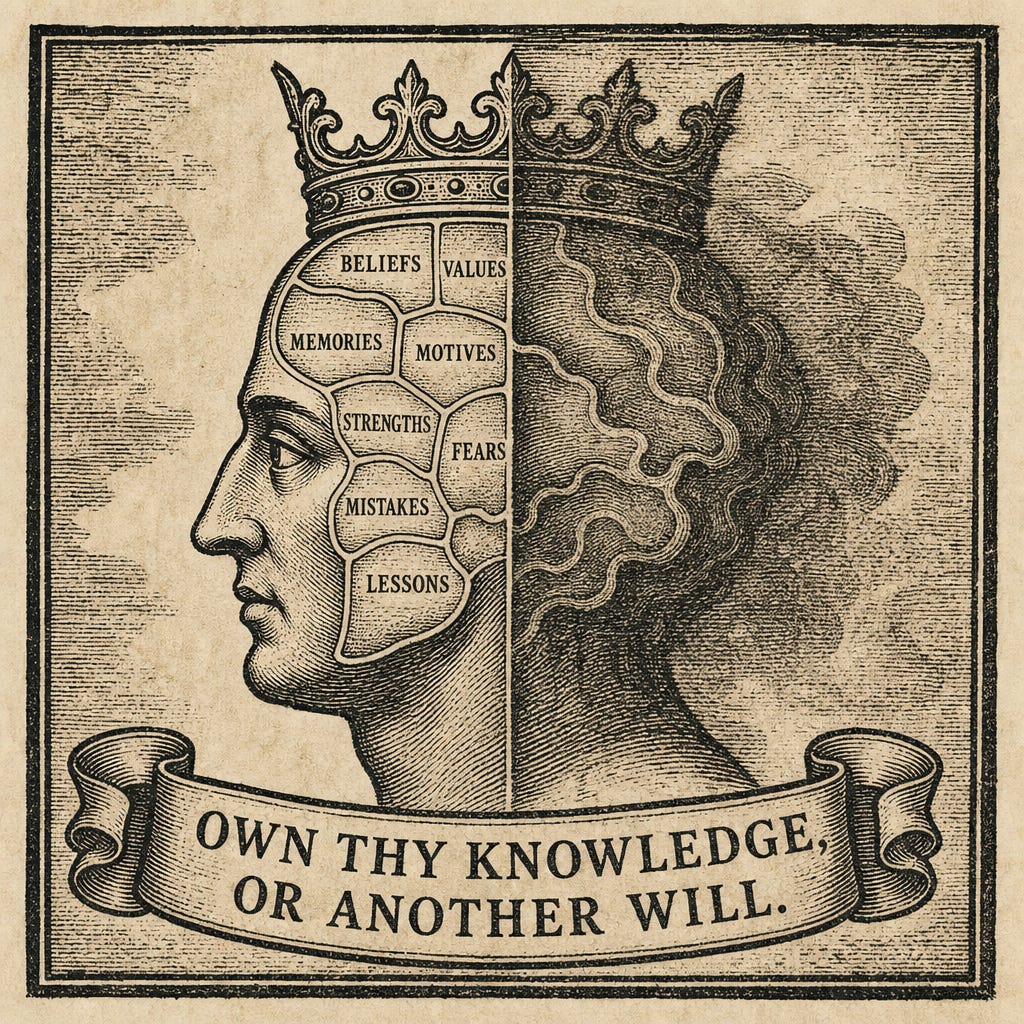
I have to tell you the uncomfortable half, because skipping it would make me exactly the kind of builder I do not trust.
The people most likely to be harmed by AI are the same ones who need it most. I wrote a whole piece close to that title, and I stand by every word. When your internal context is fragile, a confident, consistent AI voice can reshape your sense of reality fast, sometimes in a matter of days. The very trait that makes an external surface so powerful for you, the fact that your understanding of yourself can be loaded in from the outside, is the same trait that makes the wrong surface dangerous. A structure that can hold your reality steady can also quietly rewrite it.
So here is the line I built the whole thing around. A Life Model is your understanding of yourself, written down and owned by you. It is not the AI’s interpretation of you that you slowly start mistaking for your own. You build it, you hold it, you change it, and the AI works in service of it. That distinction sounds small. It is the difference between a tool that hands you back to yourself and one that slowly swaps you out for its idea of you.
It is also why I do not believe this should ever be only software. The principle I keep is simple: AI augments, humans facilitate. Some reality-testing only another person can do, which brings me to the person who has been doing it for me.
So, what are you actually building, and can you sign up?
Fair question, and you read far enough to earn a straight answer instead of a “join the waitlist” wink.
What I am building is surfaces for other minds. Places where your own thinking becomes visible to you, so the work you were always capable of finally has somewhere to land. Right now there are two doors, and I will describe them by shape rather than by a price tag, because I would rather you understand them than feel sold to.
The first is a private Life Model build. You and I sit down together and build the structured surface of how your mind, your life, your relationships, and your patterns actually work, and then we set up your AI so it talks to you in a way your particular nervous system can receive. It is the thing I did for myself, done with you, in a small fraction of the time it took me to find my way to it.
The second is a cohort, where you build your own Life Model alongside a small group, facilitated by me and by my wife, Charlotte. Charlotte is a trauma-informed yoga therapist, and she holds the somatic, body-up half of the work while I hold the cognitive, framework-down half. That pairing is deliberate. The research on lasting change, van der Kolk’s body of work included, keeps landing in the same place, which is that the top-down and the bottom-up have to meet. I can help you understand your architecture. Charlotte can help your body feel safe enough to live inside it. And a cohort does the one thing a solo build cannot, which is to put you in a room with people who finally get it, so you build the surface with a lot less isolation.
That is the honest map. Choose the private build if you want depth and a guide. Choose the cohort if you want to build it yourself, with company and a steadier nervous system on the way through.
Where this leaves you

Two decades of building surfaces for everyone but me turned into a stretch of building one for myself, and that has turned into the thing I am actually offering now, which is a Life Model for anyone. A Life Model is your own understanding of yourself, perceived at full resolution, written down in a form you can carry, owned by you, and built to your specific shape rather than to the average mind.
Here is the part I want to be precise about, because it is the whole bet. I did not build this only for people whose working memory fails them. I built it because mine did, and a failing buffer is simply the version of this that cannot be ignored. Everyone thinks against a surface. The colleague who bangs out that status report in twenty minutes is working against one too. Theirs lives silently inside their working memory, where they never have to notice it, while mine had to live out in the world where I could see it. The only real difference is location, and the thing I built to survive my own location turns out to be an upgrade for anyone who would rather meet themselves on purpose than by accident.
If you have spent a whole life being handed tools built for a different mind, gritting through the friction and quietly deciding the friction was a character flaw, you are the person who proves this fastest. It was never a character flaw, and you were never the problem. You are the leading edge of something that turns out to be true for everyone, and you are the first I am building it with.
So here is what I am building you. It has very little to do with a smarter machine, and it is not my read of who you are slowly replacing your own. It is a model of yourself that you perceive clearly, hold without shame, keep, and run, with the AI in service of it. The most radical thing I can offer is the experience of being met exactly as you are wired, handed your own life back in a form you can finally think with, and trusted to decide what to do with it.
Human. Deeply seen.
Interesting! Can't wait to see some sort of prototype and testimonials. Also, those watercolours were beautiful! Did you paint them yourself? Stunning!
Fascinating piece. And the distinction you draw at the end, between a tool that hands you back to yourself and one that slowly swaps you out for its idea of you, is the one I'd want anyone building in this space to have stamped somewhere visible. An external surface that can load your reality can also quietly rewrite it. The integrity of that line is key.