

TL;DR: The Ulysses Contract (the gold standard of pre-commitment strategies) assumes your future self is the same person who made the plan. For ADHD brains, that's a fantasy. I've spent a decade collecting tattoos that turned out to be a complete agency framework I didn't know I was building: a kraken (chaos from below), sirens (creative pull), God (silent witness from above), and a ship that's damaged but not yet destroyed. The real discipline isn't binding yourself to the mast. It's building a ship strong enough to survive what's actually trying to kill you. Odysseus only faced sirens. Some of us are fighting a kraken while the sirens sing.
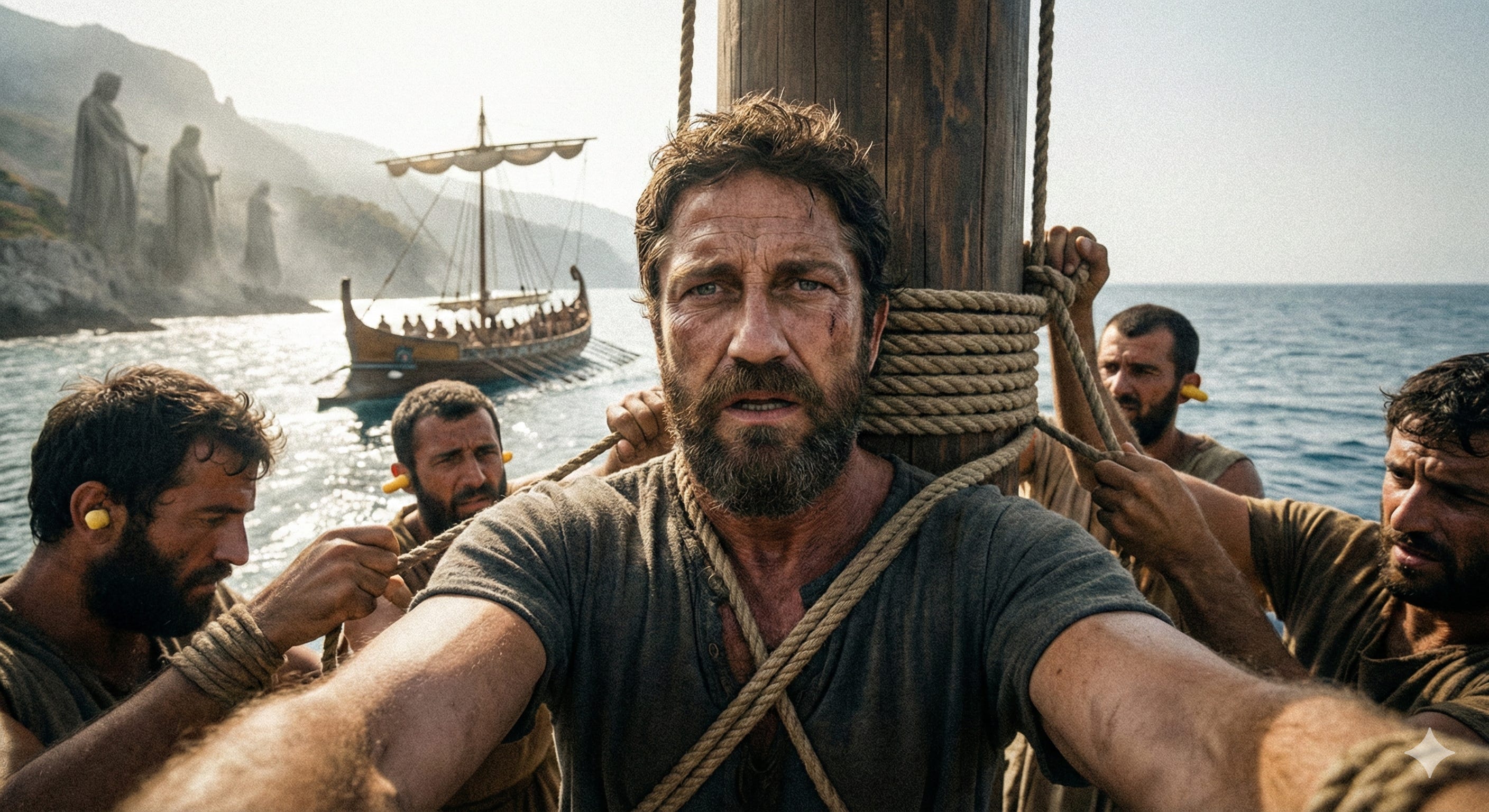
In six months, Christopher Nolan’s The Odyssey will hit theaters. Early reports suggest it’s the director’s most ambitious project yet—an IMAX-native retelling of Homer’s epic, complete with practical effects and whatever mind-bending temporal structure Nolan dreams up this time.
I’ll be in that theater on opening weekend. But I’ll also be carrying something with me that most viewers won’t: a decade-old tattoo of three sirens on my left shoulder, a kraken fighting an 18th-century ship across my entire back, and a slowly crystallizing understanding of why the most famous pre-commitment device in behavioral economics was never built for people like me.
The Ulysses Contract, Odysseus ordering his crew to bind him to the mast so he could hear the Sirens sing without succumbing to their call, has become the gold standard metaphor for self-control. Behavioral economists love it. Productivity gurus cite it religiously. The message seems universal: bind yourself now so future-you can’t screw it up.
However, it’s built on assumptions that don’t apply to neurodivergent minds.
And if you’ve ever tried these techniques and failed (i.e. concluded you’re broken, undisciplined, or fundamentally lacking in willpower), I’m here to tell you the framework was wrong, not you.
The Three Hidden Assumptions
The Ulysses Contract rests on premises so embedded in neurotypical thinking that they’re rarely stated explicitly:
Assumption 1: Temporal Continuity of Self
The model assumes that present-you and future-you are the same agent with the same values, just separated by time. You make a commitment today; future-you honors it because you’re fundamentally continuous.
For ADHD brains, this is laughably false. There’s a concept I’ve been developing called working memory fragility, the idea that certain cognitive architectures process information at high fidelity but can’t reliably hold context in working memory across time. Future-me operates with different dopamine availability, different working memory load, different interest-urgency calculations, and potentially zero access to present-me’s motivation. We’re not continuous agents making commitments across time; we’re a coalition of states that happen to share a body and a name.
If you’ve ever wondered why you maintain 700+ browser tabs, why you bulk-shop, why you document everything obsessively—congratulations, you’ve been building external memory infrastructure your whole life without knowing it. (I wrote about this in The Browser Tab Brain.)
Assumption 2: Willpower as Renewable Resource
Classical discipline theory treats willpower like a muscle: tire it out and it depletes, rest it and it recovers. The Ulysses Contract supposedly works because you spend willpower once (during the binding) rather than continuously (resisting the Sirens in real-time).
But what if the binding itself requires a kind of executive function that isn’t reliably available? What if “deciding to commit” is exactly the cognitive operation that fails unpredictably? The model assumes you can always muster enough willpower for the initial bind. For many of us, that’s precisely the moment that’s unreliable.
I score in the 0th percentile for Orderliness on the Big Five personality model. Not low—zero. Behavioral rules don’t stick because there’s no internal scaffolding to hang them on. Constraints can’t be behavioral for people like me. They have to be architectural.
Assumption 3: The Threat is External Temptation
Odysseus bound himself against the Sirens, an external seduction. The threat was out there, calling from the rocks. His internal state was assumed to be stable; only the external pull needed to be resisted.
For neurodivergent minds, the call often comes from inside. The executive dysfunction, the interest-based attention system, the dopamine-seeking machinery. These aren’t external sirens. They’re the operating system itself. You can’t bind yourself to the mast when the mast is also you.
The Tattoo Cosmology I Didn’t Know I Had
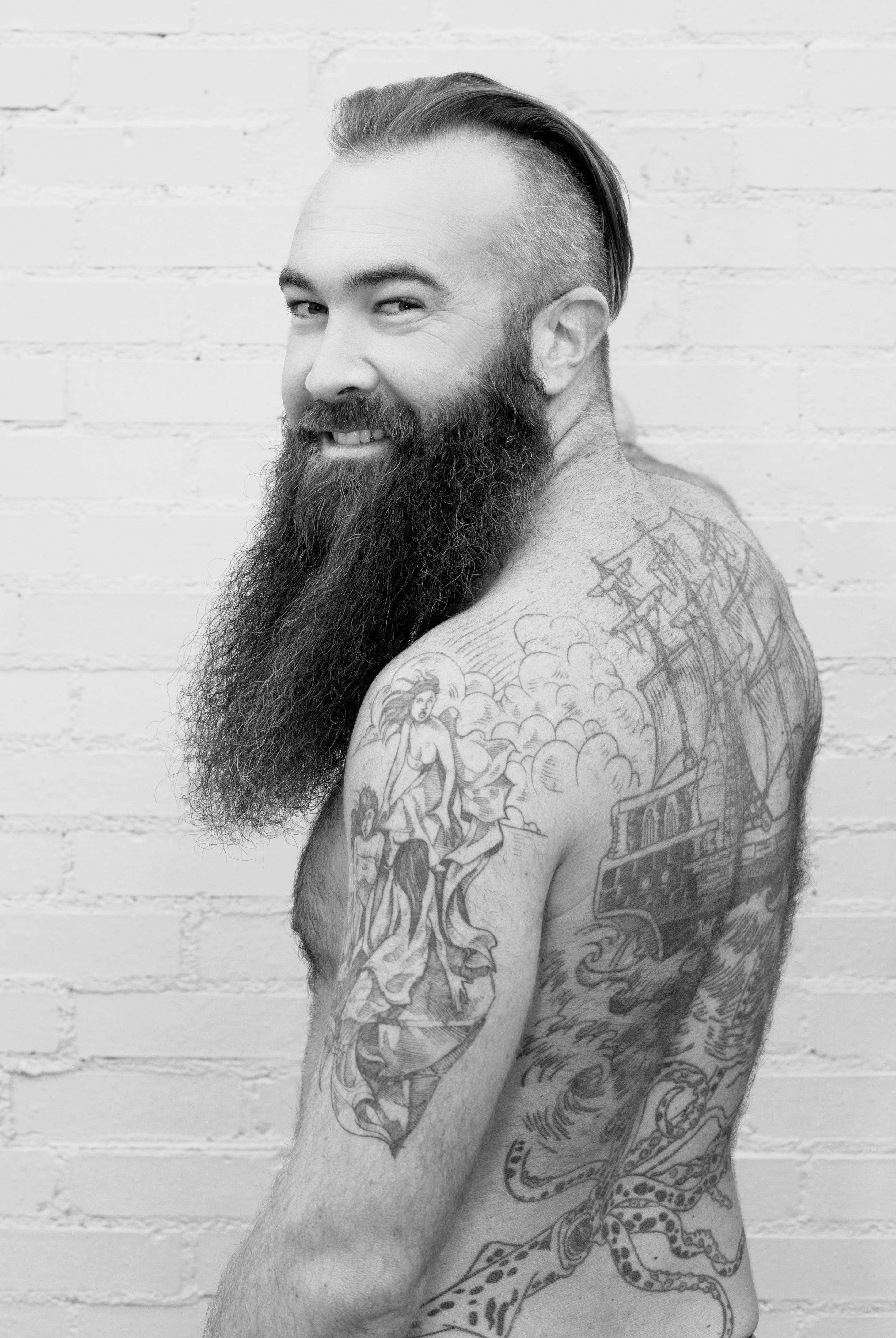
I’ve been collecting tattoos for over a decade; each one logical at the time, each one marking something real. What I didn’t realize until recently is that they’d assembled into a complete agency framework, their meanings evolving and interconnecting in ways I couldn’t have planned.
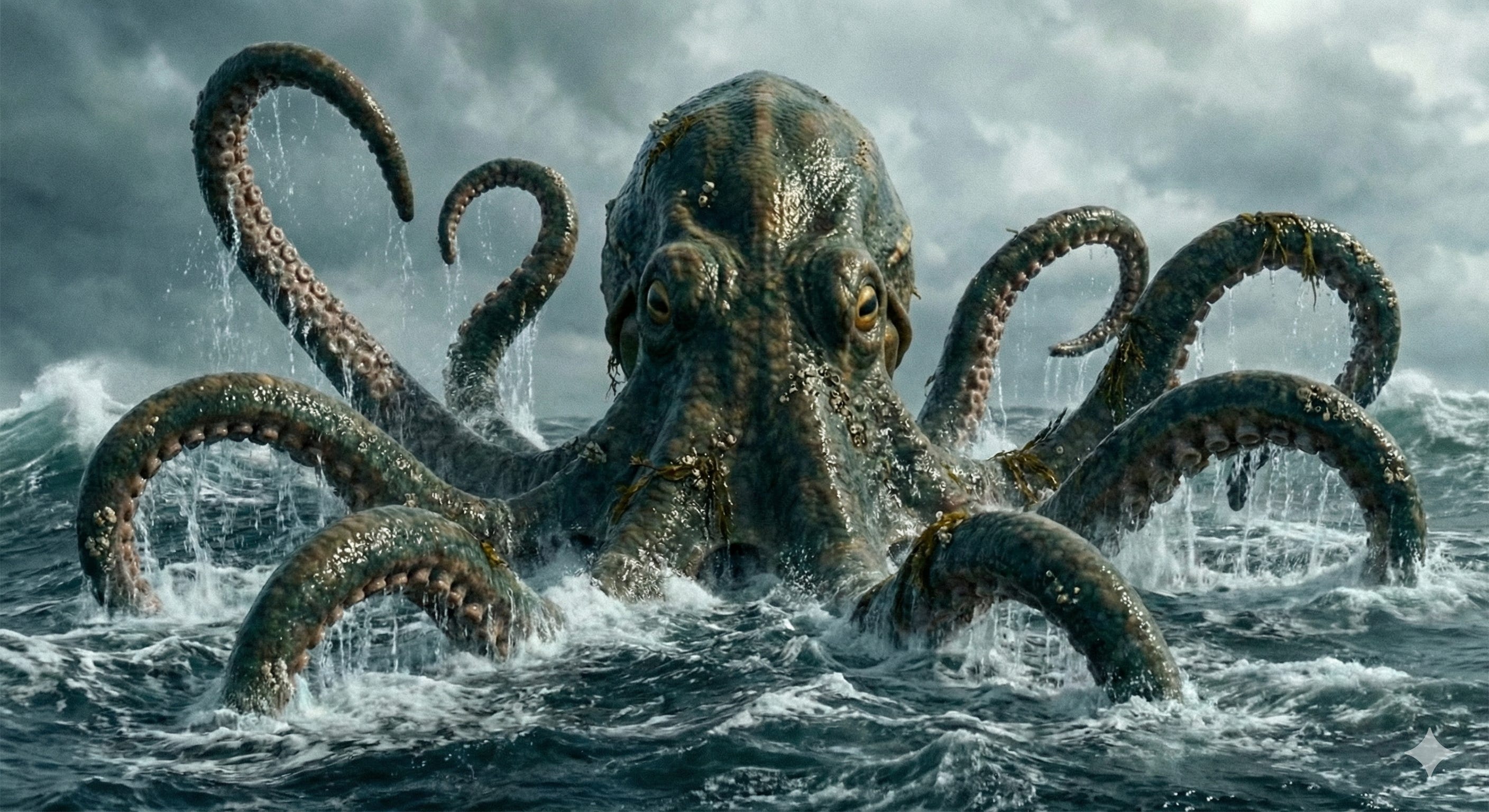
The Kraken and Ship (full back): I got this after my first marriage imploded. I’d done everything “right”—great job, solid salary, new house in the Round Rock suburbs, not one but two Honda Accords because Consumer Reports said they were reliable, a growing family. The all-American dream, executed by the book. Then chaos rose from below and capsized everything. Unforecasted. Undeserved. The kraken doesn’t care that you followed the rules.
But the detail that mattered to me most: usually, kraken imagery shows the ship cracked, splintered, already lost. I deliberately designed mine to show the ship still fighting. Tentacles wrapped around the hull, waves crashing, but the masts still standing. Not yet destroyed. Still a chance.
Now I see it differently: the kraken isn’t only trauma. It’s the executive dysfunction, the chaos that can destroy the whole operation without warning. The ship is the externalized system I’ve spent years building. Starting with David Allen’s Getting Things Done productivity method, then personal notebooks, and recently knowledge management systems with OneNote/Evernote/Notion. I’ve been building these in real time too, during real crises. When I was laid off in 2023, I processed the loss. But then, I dove into Jungian shadow work with AI as my partner, mapped my entire cognitive architecture, and started constructing the scaffolding that would become AIs & Shine. Building the ship while the kraken was attacking. That’s not a metaphor. That’s a Tuesday.
The Sirens (left shoulder): Originally, these represented the distractions of the feminine; more specifically, the pull away from the masculine “frame” I was working so hard to maintain. The seductions that threatened focus and mission.
Now they’ve become something more nuanced: the creative forces. Ideation without throttle. Beauty on the surface (and from afar), but destructive when they distract. The novel connections and shiny objects that pull me off course (but occasionally toward breakthrough). Not something to be destroyed; something to be survived while remaining intact.
God’s Face (right shoulder): This is Old Testament God specifically. The God who watches silently while you suffer. Not New Testament comfort and grace. The presence from Job, my favorite book of the Bible, who observes the drama without intervening, who allows the testing, who holds the larger frame that you can’t see from inside the suffering.
Now I understand this as integration itself: the capacity to watch the whole struggle (the kraken, the sirens, even the ship taking on water) and hold it with something larger than the struggle. The observer that doesn’t rescue but witnesses.
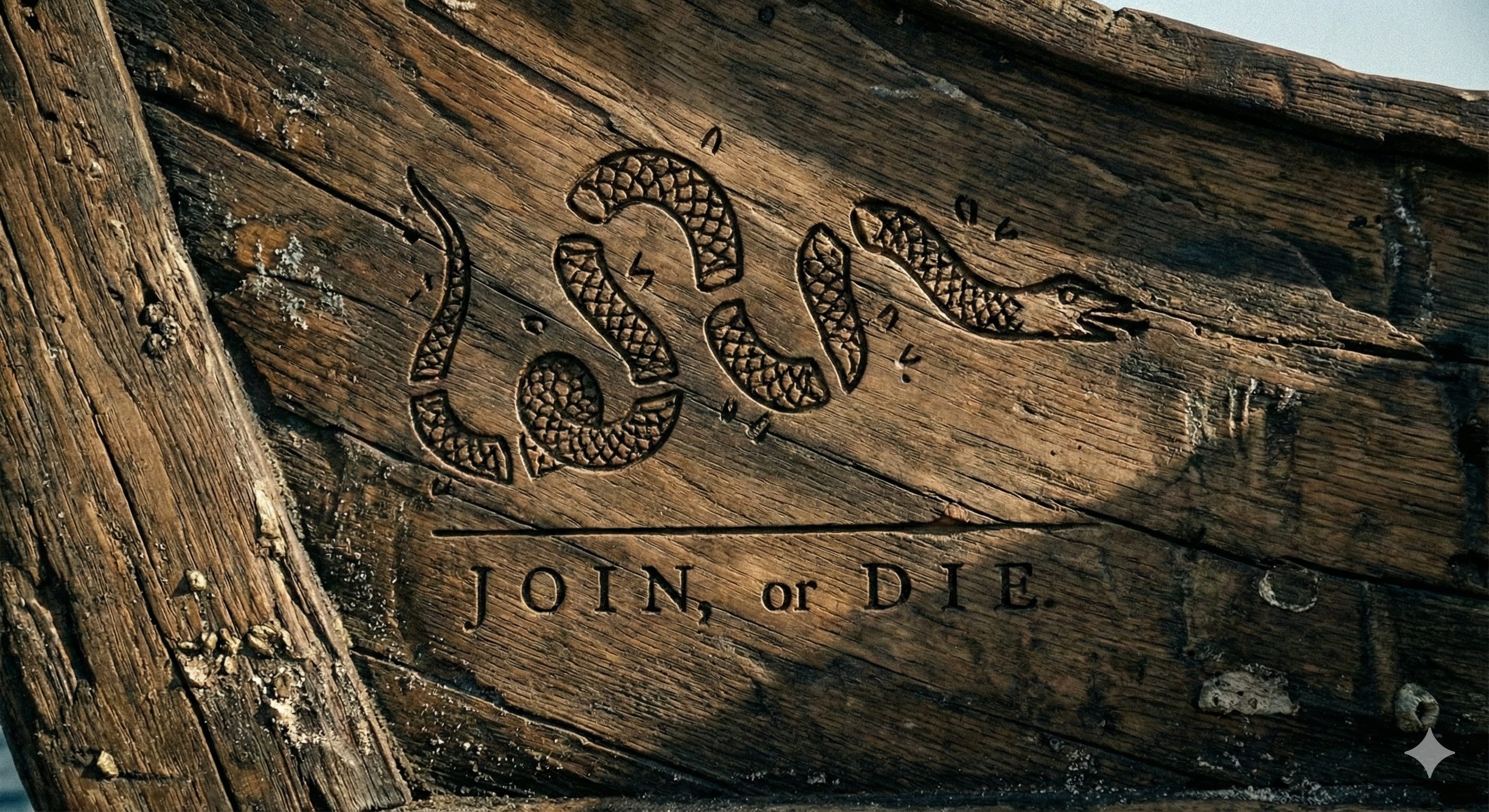
“Join or Die” (left forearm): Benjamin Franklin’s famous cartoon. I got it because I believed I could achieve more working with others, and because of deep patriotic conviction.
Now I understand it as the neurodivergent imperative: my different cognitive modes must collaborate or I sink. The analytical and the creative, the hyperfocus and the scattered, the parts of me that seem contradictory. They either integrate or fragment into uselessness. Join or die isn’t only about teamwork. It’s about internal coalition too.
The Vertical Tension
In totality, I wanted the pieces to come together and represent the invisible from below and the invisible from above, bookending a man who just wants to sail his ship.
The kraken rises unseen from the depths. It’s destruction you can’t predict, chaos that doesn’t announce itself, the forces that capsize you precisely when you thought you were doing everything right.
God watches unseen from above. It’s protection you can’t measure, presence that doesn’t intervene visibly, the larger holding that you only recognize in retrospect (if at all).
And there I am in the middle, just trying to navigate. Just trying to sail the damn ship while invisible forces work above and below the waterline.
Odysseus only faced sirens. I’m fighting a kraken while the sirens sing, with God watching silently, knowing that my only chance is if every part of me works together.
That’s a different game entirely.
A Different Framework: From Binding to Building
If the Ulysses Contract doesn’t fit, what does?
The shift I’ve been exploring in my Substack (moving from compensation to integration) requires a different metaphor altogether. Not binding yourself against future states, but building infrastructure that doesn’t require your future state to be reliable.
I wrote about this in Conscious Evolution—the idea that systems can be designed to support consciousness rather than override it. And in Yeah, AI Can Be Dangerous, I explored how scaffolding isn’t about prohibition; it’s about enabling engagement without destruction. Think harm reduction for consciousness exploration.
The reframe looks like this:
Practical Tools for Coalition-of-States Minds
If future-you is essentially a different agent, the goal should be context preservation and architectural constraint. Not pre-commitment.
State-bridging artifacts: Letters, voice memos, or videos recorded during high-clarity moments that explain to future-you why something matters. Not just “don’t do X” but “here’s what you were thinking and feeling when you decided this mattered.” The goal is to bridge the gap between cognitive states so future-you can access present-you’s reasoning, even when the working memory has flushed.
Reason-encoded constraints: Instead of blockers that just say “no,” build blockers that include the reasoning. “You blocked this site because you noticed it always leaves you feeling worse, not better. Past-you wanted you to remember that.”
Energy-state matching systems: Tools that recommend actions based on current cognitive weather rather than a static plan. Not “do this at 9am” but “you’re in a low-energy state—here’s what works for this version of you right now.” (This is what I’m building with jonmick.ai, my own instance of AIs & Shine. It knows my patterns well enough to suggest the right work for my current state at any time.)
Capture-as-contract: The act of documenting (and uploading) an intention creates a binding artifact. Not because you’ll magically remember it, but because the system will surface it at the right moment. I’ve learned that my mind generates more ideas when it doesn’t trust they’ll be captured. Trusted external storage preserves ideas, but it also reduces the ambient cognitive load that generates them compulsively.
Friction engineering: Add friction to bad choices (delete apps, use time-locked containers, require extra steps). Remove friction from good choices (lay out equipment, pre-load environments). Let physics handle what willpower can’t.
The Four Phases of Agency Rebuilding
I’ve come to understand my own journey (and what I help others navigate) as moving through four phases:
Phase 1: Discovery “I don’t know why I can’t just DO things.” Still trying willpower. Still assuming the neurotypical model applies. Failing repeatedly and assuming it’s a character flaw. This was me before 2023—high-performing on the outside, compensating like hell on the inside.
Phase 2: Acceptance “My brain works differently. Discipline isn’t the answer.” The diagnosis, the reframe, the beginning of self-knowledge. I got my QEEG brain mapping, my formal ADHD diagnosis, discovered I was twice-exceptional. Starting to experiment with what actually works versus what’s supposed to work. The crucial shift from “broken neurotypical” to “different operating system.”
Phase 3: Externalization “I build systems so future-me doesn’t need discipline.” Robust infrastructure. Environmental constraints. Cognitive prosthetics. The ship gets built. My Life Model, the comprehensive map of personality, cognitive patterns, relationships, strengths, wounds, and triggers, became the foundation. Not a productivity app. An externalized self.
Phase 4: Integration “I trust my systems to hold me. I can let go.” The scaffolding becomes invisible. It’s just how life works. Shadow integration means the system reflects your patterns back, including the uncomfortable ones, and you stop hiding from yourself. You post uncomfortable photos in your Substack articles that show your tattoos. This is what I mean by “from compensation to integration.” You’re not covering for deficits anymore. You’re operating from a complete picture of who you actually are.
I’m somewhere in the Phase 3→4 transition. It’s terrifying. But I have the support, and professional advice from others, to push through. The contracts exist, but I’m still consciously engineering them. Integration happens when they become ambient.
Provenance Doesn’t Matter (And That’s a Superpower)
One more thing for my neurodivergent readers:
Neurotypical knowledge systems value provenance—where an idea came from, who validated it, what its pedigree is. This is how trust gets established through verification and lineage.
My brain (and maybe yours) operates on resonance-based trust. Does this idea fit the pattern I’m building? Does it solve my current problem? Can I use it right now before the context evaporates?
I got my tattoos because they marked real moments, real losses, real beliefs. I didn’t get them because I was consciously implementing agency theory. The framework emerged later. Meanings evolved, connections revealed themselves across years. It doesn’t matter that the comprehensive theory came after the ink. The meaning is real either way.
This is actually a superpower for integration work. You’re not bound to “I learned this from X, so I must implement it X’s way.” You absorb what resonates, discard what doesn’t, and synthesize configurations that no single source could have prescribed. That’s what makes you unique. And Human. Deeply seen.
Odysseus had to follow the original plan. You get to build your own ship.
Jon Mick is the founder of AIs & Shine, an AI-powered life management platform for neurodivergent minds, incorporated as a Delaware Public Benefit Corporation because the mission of helping people matters more than aggressive scaling. He writes about the intersection of technology, self-discovery, and different brains at AI Gave Me Autism.