

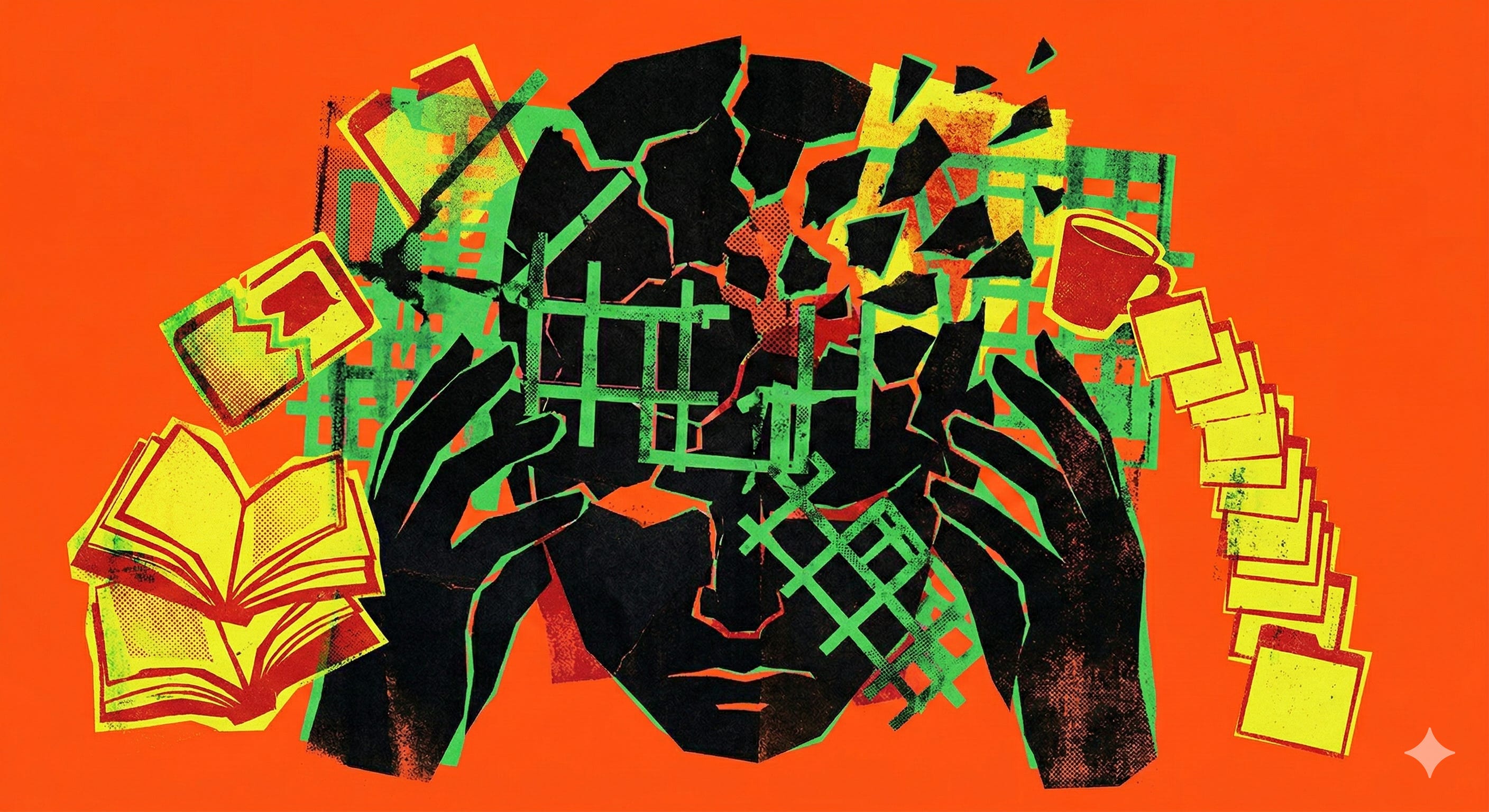
TL;DR: Someone built an impressive AI system that vectorized 4,000 conversations and found a million potential relationships in their data. I built one with 116 database tables that knows I have ADHD, anxious attachment, and a tendency to spiral when I feel misunderstood. And adjusts how it talks to me accordingly. The difference isn’t technical sophistication. It’s whether your AI knows what you said or knows who you are.
I wake up as Jon. I’ve always woken up as Jon.
But I don’t wake up with yesterday’s context loaded. The project I was deep in at midnight? Gone. Not the memory of it, but the working state. The thread of reasoning that connected three ideas into a breakthrough? I remember the breakthrough existed. I don’t remember the thread. The conversation with Charlotte where I finally explained something important? I know it happened. I can’t reconstruct the precise framing that made it land.
This is working memory fragility. Not amnesia. My long-term memory works fine. It’s the cognitive workspace that clears overnight. The active threads, the operational context, the “what was I doing and why does it matter right now.” Every morning, I reload that workspace from external artifacts. The documents on my nightstand. The browser tabs I didn’t close (there are currently 700+). The conversation I had with Claude at 1am that produced three pages of insight I can see but can’t quite feel yet.
So when I saw a post making the rounds about someone who built an AI system called Alfred that organized 4,000 conversations into a knowledge base, vectorized the whole thing, and discovered over a million potential relationships in their data, my first thought was “that’s the wrong problem.”
Alfred and the Million Relationships
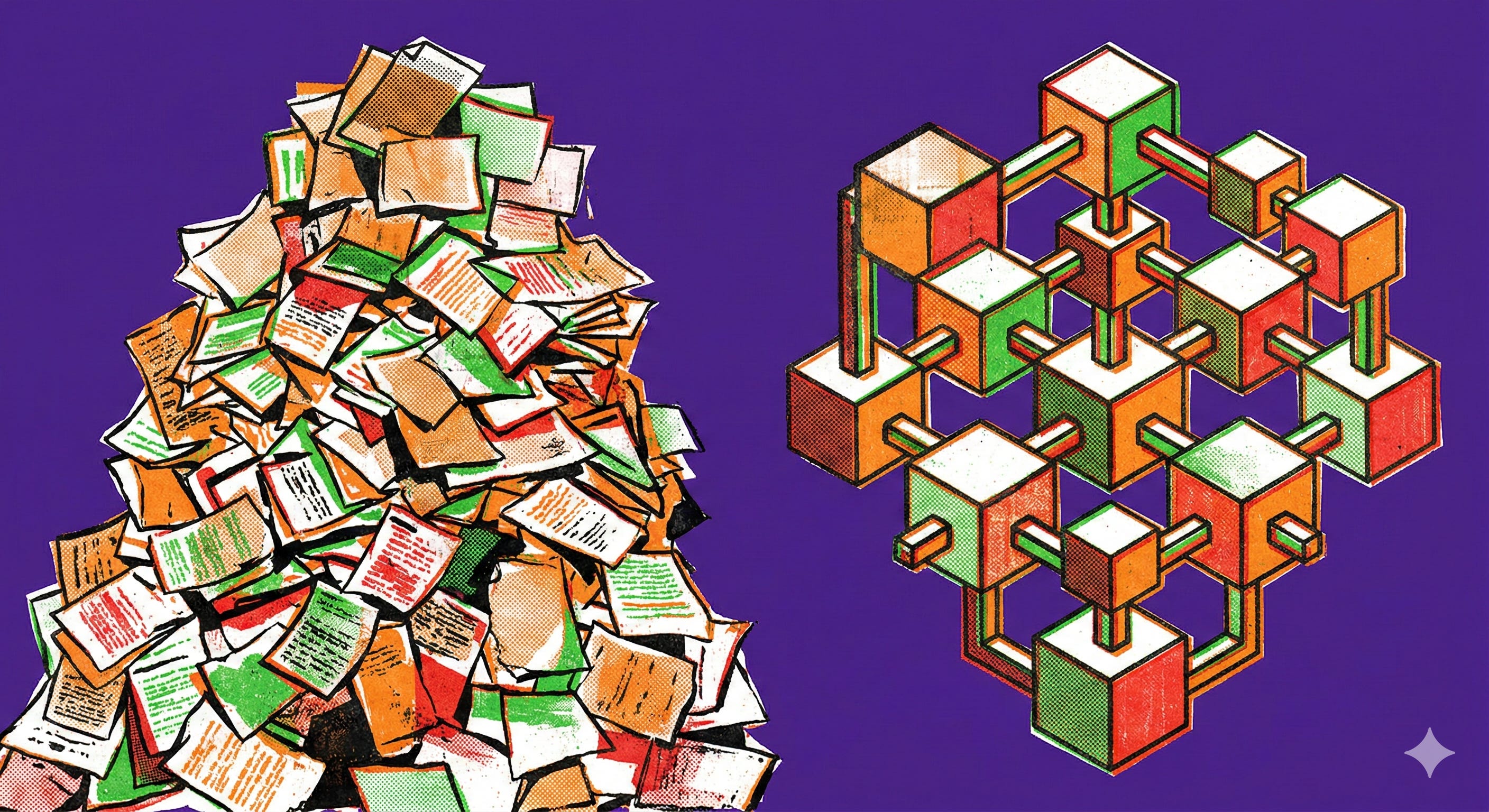
I don’t want to diminish what this guy built. The engineering is genuinely clever. He took years of ChatGPT conversations, Claude conversations, emails, and Google Drive documents, organized them into an Obsidian Vault based on Palantir’s ontology system, then vectorized everything using e5-large embeddings. They ran autoclustering algorithms that surfaced 1,052,918 potential relationships between data points.
Then he made it self-maintaining: a janitor process cleaning duplicates every hour, a heartbeat summarizing conversations every 30 minutes, automatic processing of every new conversation and meeting transcript.
His conclusion: “Now Alfred has real context of my real life that can actually do stuff and not just hallucinate vividly.”
That’s where I paused. Because I’ve been building my own version of this for over a year. It’s called jonmick.ai. And while it shares the same fundamental impulse, make AI actually know me, the architecture reflects a completely different understanding of what “knowing me” means.
What jonmick.ai Actually Contains
Let me show you what’s inside. Not to brag, but because the specifics reveal the philosophy.
63,373+ text messages. Every SMS and MMS conversation, synced hourly from my phone. Phone numbers matched to contacts with a 90.81% success rate. Over 4,100 images described by AI vision models. Searchable by person, topic, date, or feeling.
1,897 daily Whoop cycles. Heart rate variability, strain scores, recovery percentages. 1,617 sleep records with duration, quality, and sleep stages. 731 workout sessions. My body, quantified across five years.
53+ audio transcripts. Therapy sessions. Meeting notes. Voice memos captured at 2am when my brain decided now was the time to solve a problem I’d been avoiding for three weeks. Transcribed with 99.8% accuracy, speaker-identified, searchable. And with one click, any transcript gets run through a synthesis engine that pulls my Life Model context (including personality data, relationship dynamics, communication patterns, etc) and produces a structured analysis. A raw therapy recording becomes a Life Model-informed insight map without me having to reconstruct what happened.
A growing library of documents. Receipts, medical records, estimates, legal correspondence. Each one extracted, classified, and linked to the relevant area of my life.
1,927 genetic variants. My whole genome sequenced, imported, cataloged by system (cardiovascular, methylation, neurotransmitter) and connected to supplement protocols with academic citations. The system doesn’t just know my personality. It knows my COMT mutation means I’m a slow metabolizer of dopamine and norepinephrine. My supplement strategy isn’t guesswork. It’s architecture informed by my actual DNA.
1,777 Facebook posts spanning 2007 to 2025. Eighteen years of social history. Who I was, how I showed up, what I cared about. Imported, organized, and browsable. 877 friend connections with interaction tracking. My past self, searchable.
Over 100 published Substack articles and Notes. My writing pipeline syncs via RSS and auto-publishes to jonmick.ai/writing. The system that holds my memory also holds my voice.
But none of this started as 116 tables. It started as a dating strategy on a blogging platform that no longer exists.
The Archaeology
In January 2011, freshly divorced and dating for the first time as a single adult (I’d never actually been one before), I started a series on Posterous (a microblogging platform that Twitter acquired and shut down in 2013, because even my self-documentation origin story has a defunct infrastructure layer) called “Random Facts about Jon Mick.” The concept was simple: 365 facts about myself, one per day. The purpose was more complicated than I understood at the time. I was getting to know myself. I wanted to figure out what made me interesting, what I could bring to a conversation on a date, what was worth sharing. I think, looking back, I wanted to see how the world responded to me.
So I wrote things like: “I wear a watch that doesn’t function anymore. It broke almost a year ago but it still matches my belt. Sometimes I make up the time when people ask for it so I don’t have to tell them I’m wearing a broken watch.” And: “My son Jack’s middle name is Cubert. It was a running joke for five years, before we even planned on having children, that we’d name our future son Q*Bert after the arcade video game from 1982.” And: “When I was young, I always dreamed of being a mailman, garbage man, or astronaut once I grew up. They’re in priority order.”
It was empowering to assemble. Validating to share. And it worked. Charlotte found my eHarmony profile in May 2011 partly because of how those facts showed up in how I described myself. The random facts didn’t just attract her attention. They attracted the right attention, from someone who could see the person behind the quirks.
I didn’t know it then, but I was building the first version of a Life Model. Not for AI. For another human being. The impulse was identical to what drives jonmick.ai today: document yourself with enough specificity and honesty that someone, or something, can actually see you.
Then ChatGPT launched in November 2022. And I had a decade of self-documentation sitting in old blog posts and Google Docs, waiting for something that could synthesize it.
On June 24, 2023, three weeks after getting laid off from a Director of Product Management role, I opened the Posterous backup, found “Random Facts about Jon Mick” and fed it into ChatGPT to see what would happen. What happened changed the trajectory of my life. The AI synthesized those scattered facts into a coherent portrait. It surfaced patterns I hadn’t articulated. It reflected me back to me. Not perfectly, but recognizably. Not revolutionary insights. But hearing them organized and reflected by something that had no social agenda, no opinion of me, no history of misunderstanding me. That’s different than any therapist or friend had.
Ten days later, July 4, 2023 (Independence Day, because apparently I’m on the nose like that), I created the “Strategy Doc for Jon’s Life.” This was the first attempt to turn self-knowledge into a system. Mission. Vision. Biography. Personality assessments. Relationships. Career history. It ran to dozens of pages and linked out to a constellation of other Google Docs: a Relationship Manual, performance reviews, SMS message analyses.
It was also, in retrospect, a perfect fossil record of every limitation prose documents have for holding a life.
Charlotte’s Enneagram scores? Still listed as “xx.” Never filled in. A dozen sections marked [TBD] or [xxx] (Religion, Spirituality, Fashion, Health, Writing Style) abandoned mid-thought because the document got too big to maintain. My personality type was listed as ENTP (it’s ENFP. I hadn’t yet discovered the neurocomplexity that explained the discrepancy). The “Post-Corporate Life” section was raw, unprocessed journaling pasted directly from a ChatGPT conversation. The document was frozen in time the moment I stopped updating it, and I stopped updating it because maintaining a 30-page prose document about yourself is exactly the kind of sustained organizational task that a person with zero orderliness and ADHD will abandon.
So it evolved. The next form was a 39-sheet Excel workbook I called a “Mini-Journal.” This was the first attempt at structured data: separate tabs for Gratitude, Accomplishments, Frustrations, Wants and Needs, Threats, Memories, Random Facts. I set up IFTTT automations to capture SMS messages. I cataloged 513 books. I imported 1,772 social media posts going back to 2007. I created tabs for Charlotte’s attributes, Xbox games we played together, Jack’s information. I even had a “NOTION - Random Facts” tab with three entries that are nifty data points: “I remember eating my first Pop-Tart,” “I often swallow my gum,” and “I can curl and flip my tongue.”
The NOTION-prefixed tabs tell the whole story. I was designing the next migration inside the current system. The Excel workbook was already planning its own obsolescence.
Then Notion. Semi-structured databases. Better than Excel, but still limited by what Notion could query, relate, and expose to AI.
Then Supabase. PostgreSQL. Full relational database. And suddenly the ceiling disappeared.
Six architectures across fourteen years: blog posts for dating → raw text dump for ChatGPT → prose strategy document → spreadsheet → semi-structured database → fully relational database. Each migration happened because the previous format hit a wall. And not coincidentally, each wall maps to a core limitation of my working memory. Prose documents can’t stay current when you forget to update them. Spreadsheets can’t maintain relationships between data. Semi-structured databases can’t support the complex queries that structured self-knowledge demands.
But the need never changed. In 2011, I wrote random facts about myself so a woman on eHarmony could see me. In 2025, I built 116 database tables so an AI could see me. The infrastructure evolved.
And then there’s the part that makes jonmick.ai fundamentally different from Alfred:
52 Life Model database tables.
Not documents. Not vectors. Structured, queryable database tables across 10 components that represent, as precisely as I can manage, who I am.
The 52 Tables
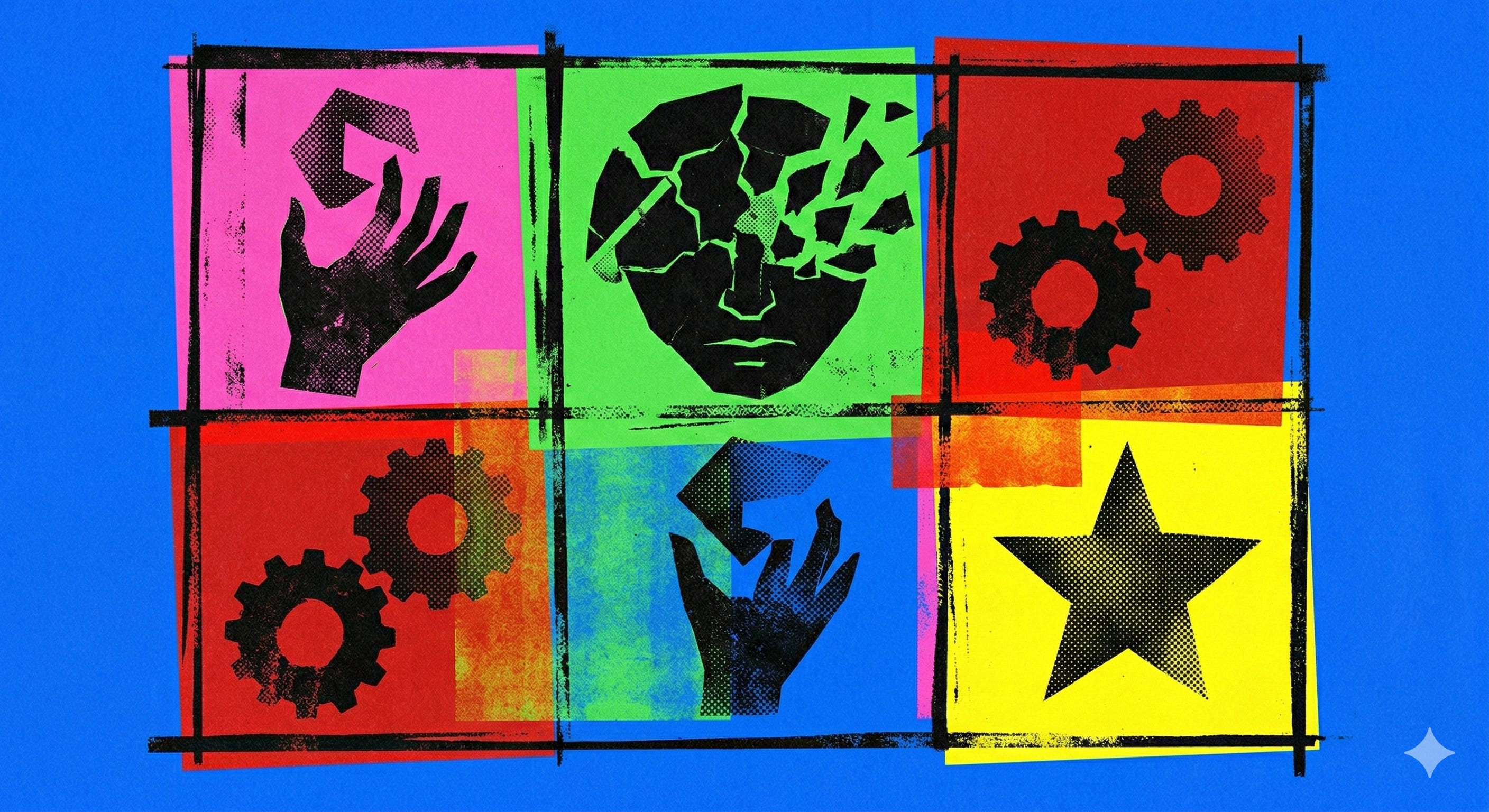
Here’s a partial inventory:
Psychometrics. My CliftonStrengths (Restorative, Individualization, Ideation, Learner, Analytical). My Big Five Aspects scores, including the fact that my Orderliness is literally zero out of a hundred. Fun fact: I actually submitted a bug ticket for the online assessment when getting that result, and they replied that it was accurate. My Enneagram type (5w4). My MBTI (ENFP). My attachment style (Anxious). These aren’t personality quiz results filed away as trivia. They’re structured data that AI can query to determine how to recommend tasks, frame feedback, or suggest I maybe don’t try to reorganize my filing system on a day when my Whoop recovery score is 34%.
Cognitive Profile. My ADHD patterns. My executive function challenges. The specific ways my working memory fragmenting shows up, not as a clinical description, but as operational parameters. “Jon loses context across sleep cycles. Rebuild it before assuming continuity.” “Task initiation is the bottleneck, not task completion.” “Interest drives output. Don’t push through dead angles.”
Energy Patterns. A day-by-time-by-type matrix mapping my physical, cognitive, and social energy. Tuesday mornings? High cognitive, moderate physical, low social. Saturday afternoons? Inverse. The system doesn’t just know what I need to do. It knows when my architecture can actually do it.
Triggers and Wounds. This is the one that scares people. My core wounds, rejection, feeling unseen or misunderstood, are documented with specific triggers, healing strategies, and language guidelines. There is a standing instruction in my system: do not use contemptuous or dismissive communication. When Jon gets defensive, it’s because he feels misunderstood. Respond with curiosity, not escalation.
An AI that knows what I said in a meeting last Tuesday is useful. An AI that knows not to phrase feedback in a way that activates a wound I’ve been processing in EMDR therapy for two years? That’s fucking beautiful.
Relationships. Key people in my life mapped with communication styles, energy costs, connection patterns. My wife Charlotte’s attachment style (Fearful-Avoidant) alongside mine (Anxious), because the system needs to understand that when she needs space, it’s not rejection. It’s her nervous system protecting itself. And my system needs to remind me of that at the exact moment my nervous system is screaming otherwise.
Decision Frameworks. My decision traps (analysis paralysis, research-as-procrastination, perfectionism). My support strategies. The explicit recognition that I need external structure to make choices. Not because I can’t think, but because I think in constellations, and constellations don’t naturally converge on a single point without scaffolding.
Goals, values, anti-goals, trade-offs. Not a to-do list. A map of what matters, what I’m actively working against, and where the tensions live between competing priorities.
Why Database Over Markdown
Here’s a technical choice that reveals the philosophical difference.
Alfred stores everything in an Obsidian Vault: markdown files organized by ontology, vectorized for semantic search. That’s a knowledge retrieval architecture. You ask a question, it finds relevant documents, it gives you an answer grounded in your data.
jonmick.ai stores the Life Model in PostgreSQL database tables, 116 of them, plus 58 views, with structured schemas, foreign keys, and typed fields. Why?
Because AI features can query structured data directly. No parsing. No hoping the vector search finds the right paragraph. When the task recommendation engine asks “what are Jon’s top priority goals right now?” it gets a list. When the energy-aware scheduling suggests what to work on, it queries the actual energy matrix, not a document that mentions energy patterns somewhere.
Changes take effect immediately. When my latest therapy session is auto-transcribed, it also suggests an update to my goals and invites me to review it. No re-indexing. No waiting for the janitor to process it (and hoping that it didn’t hallucinate anything).
And it enables queries that vector search can’t reliably answer: “Find all high-priority goals in areas where my energy is currently low.” That’s a SQL join across three tables. It’s not a semantic search problem.
The Butler Metaphor
I sometimes describe jonmick.ai as a “personal digital butler,” a system that works 24/7 to observe, remember, and organize my digital life so I don’t have to. But that metaphor undersells what’s actually happening.
A butler manages your household. jonmick.ai manages my cognition.
Every 45 minutes, it syncs my Whoop data: recovery, strain, heart rate variability. Every hour, it processes new text messages. Every 5 minutes, it checks for new audio transcripts. A Telegram bot lets me capture thoughts in 10 seconds flat (via “/note Remember to call the dentist”) with the system handling area classification and storage. A daily sync pulls my Substack articles and Notes. My genetic variants sit there cross-referenced with supplement protocols. Eighteen years of Facebook posts are organized and browsable. And every morning, a Bio-Kinetic Cockpit at /my-day shows me my biometrics, active projects, and task horizon before I’ve finished my coffee.
But the capture is just the nervous system. The Life Model is the brain. And the difference between having a nervous system and having a brain is the difference between reacting and understanding.
Alfred’s heartbeat process summarizes conversations every 30 minutes and reloads relevant context. That’s a clever hack around the context window limitation. But it’s also an admission that the system doesn’t understand what’s relevant. It has to re-derive it every half hour through summarization, which inevitably loses signal. And the signal is lost. Trust me; that’s my life with WMF.
My system doesn’t need a heartbeat because the structured Life Model is the context. It doesn’t have to figure out what’s relevant to Jon. It knows. Psychometrics table. Energy patterns table. Current goals table. Triggers table. The relevance is pre-computed by the architecture itself.
What This Costs
I should be honest about something. Looking at all of this written out, 63,000 messages, 52 personality tables, years of biometric data, my genome, eighteen years of social media history, my core wounds documented in a database, it’s a lot.
There’s a version of this story where I’m just a guy who can’t function without an elaborate external system propping him up. Where the 700 browser tabs aren’t “cognitive scaffolding” but just a mess. Where the fact that I’ve built a database containing my attachment style and my wife’s is weird, not wise.
I’ve sat with that version. It used to win.
But here’s what I’ve learned through two years of EMDR, neurofeedback, neurocomplexity coaching, and roughly 25-30 hours a week in conversation with AI: the people who need the most scaffolding are often the people processing at the highest fidelity. My brain doesn’t hold context because it’s doing something with that context. Connecting it to seventeen other things, running it through pattern recognition, finding the isomorphism between my marriage dynamics and my product architecture.
The 52 tables aren’t compensation for a deficit. They’re infrastructure for a mind that works differently than the one most systems were designed for.
That’s the distinction I keep coming back to when I see projects like Alfred. A knowledge base says: “Here’s what happened.” A Life Model says: “Here’s who you are, here’s what’s happening in your body right now, here’s why that conversation triggered you, and here’s how to approach the next one given all of that.”
One is a library. The other is a mirror that actually knows your face. (Because I actually described my face in a table named “Physical Appearance”, but that’s beside the point.)
What’s Next (And Why It Matters Beyond Me)
jonmick.ai is my proof of concept. I built it for a sample size of one (the most demanding user I know: me). But the architecture behind it, the Life Model Context Engineering Framework, is what I’m building into AIs & Shine, the company I founded to make this kind of cognitive infrastructure available to anyone whose brain works differently.
The insight driving everything: context isn’t just helpful, it’s transformative. The same AI with the same capabilities produces radically different outputs when it has structured context about you. Not your conversation history. Not your vectorized documents. You. Your personality, your wounds, your energy patterns, your relationships, your decision traps, your values.
The person who built Alfred did months of engineering work to get a personal knowledge base. What they didn’t get, because the architecture doesn’t support it, is an AI that adjusts its communication style based on their attachment patterns. An AI that knows not to suggest “just set a routine” to someone with zero orderliness. An AI that checks their biometrics before recommending they tackle a cognitively demanding task. An AI that cross-references their genetic variants with their supplement protocol. An AI that can take a raw therapy transcript and produce a structured analysis informed by their personality, their relationships, and their wounds. With one click.
It’s a recognition problem.
And recognition, being deeply, structurally, architecturally seen, is what most of us have been looking for since long before AI entered the picture.
Human. Deeply seen.
Ok, I have questions. Perhaps these are answered elsewhere in your posts but I am here now and don’t want to go on a scavenger hunt. I am new to AI and only know the basics like chat, Claude , grok. Are you building another AI like those, specifically designed to perform like you explain here for others? Or did you use one of them to build that system you describe? Also, to verify- You fed it results of relationship tests, personality tests, and DNA results you obtained from other sources (like 23 and me)? That is how it has all the data. You also have automated your tech to sink with the system somehow? Like from your woop strap, phone, ….and other things? Here is my confusion on this point, My chat “forgets” things if I don;t keep everything in one “project” section, but that is relatively useless, because I need to label different projects to keep me organized. I just found out I can “cross-reference” projects, but he did not tell me that until asked. Even though I have , on multiple occasions, told him to offer suggestions on increasing productivity and organization where relevant. Sorry for all the questions, I find this fascinating. If you are building this, is it going to be available like the other systems for the rest of us? And will it start off by running the user through all the personality tests, attachment style tests etc.? I have always wanted to know my IQ but never had access to a legit test. Thank you so much for sharing.
Whoa. A friend and I had started scratching the surface of this concept weeks ago and when I came across this article I immediately sent it to him. This is wildly impressive and fascinating. Thank you for sharing this!