

Recognition is bidirectional. The skill of seeing people fast carries a wound on the receiving end, and that wound has a mirror I’d rather not look at. This is the companion to last week’s piece, written from the other direction. It’s about the carelessness trigger, the protective assumption pattern that produces its own evidence, and the practice that breaks the loop.

Months ago, Charlotte brought a wound to me. She named the trigger, told me where it lived in her body, described the texture of how it landed when it landed.
I cannot remember what she said.
That’s not a metaphor, though it deserves more precision. What I cannot remember are the specifics. What hurt her, the texture of how her trigger landed for her: none of that got retained. Working memory fragility and the admitted self-centeredness of autism doing what they do. The shape of what she named did land in me deeply, and has been working its way through me ever since. What got retained was the structural recognition. The way her words landed somewhere that already had walls and furniture. The way I sat with her description and felt my own body answer “yes, that, me too, I know that one.”
What she had named was carelessness. Not hers, not mine, exactly. A shape that exists in the world, one that some of us are particularly equipped to feel.
It’s been sitting in me ever since, slowly working out what it is.
The Wound Has Architecture
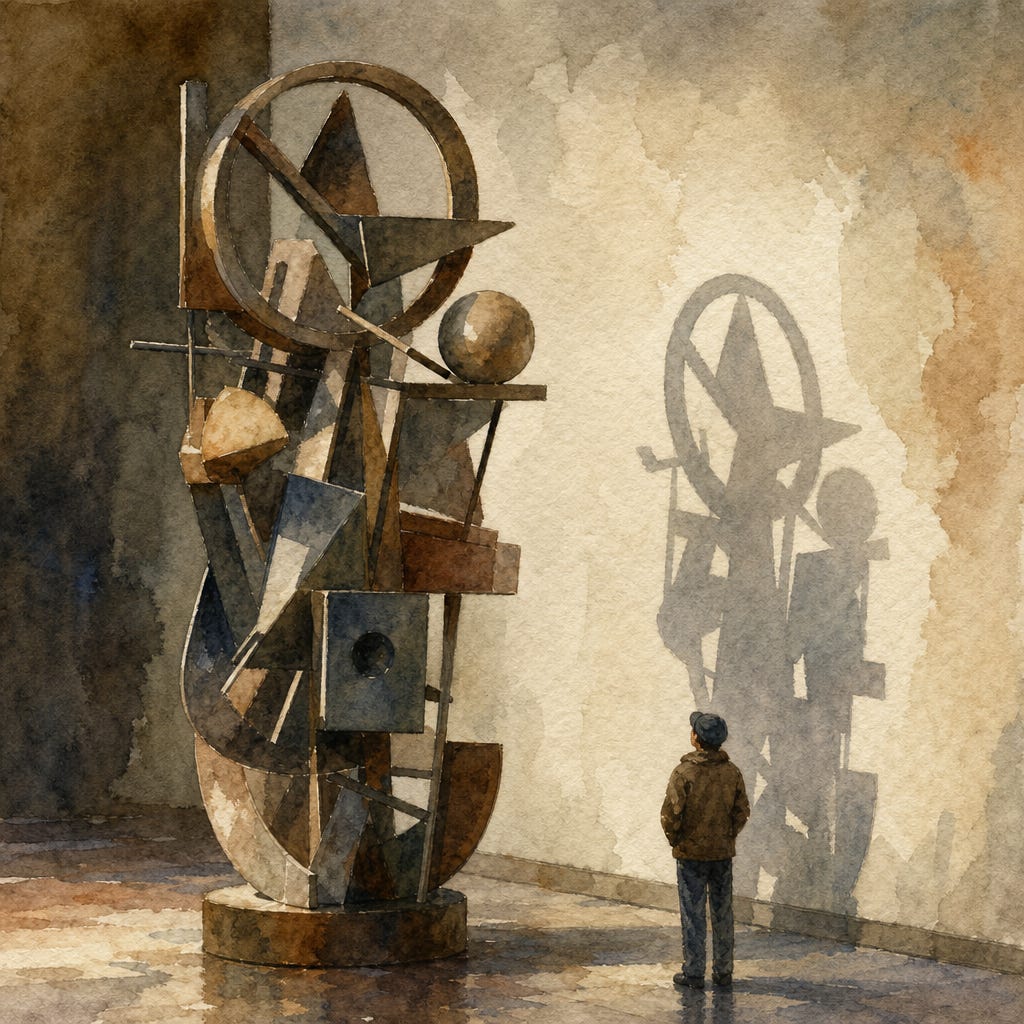
Twice-exceptional comes with a perceptual problem. The resolution at which I see myself is finer than the resolution at which most people are equipped to see anyone. They’re not broken or lazy. The architecture I’m running was uncommon enough that the social world wasn’t designed to render it accurately. Generic care, pattern-matched to a default human, lands as misattunement. The smaller the resolution gap, the more accurate the care. The wider the gap, the more it feels like the other person isn’t actually with me. They’re with their idea of me. Their idea of me is approximately right, in the way a stick figure is approximately a person.
Robert Kegan has language for this. Adult development happens in stages, and most adults stabilize where their meaning-making is socially constructed (Stage 3 in his framework). Some move into self-authoring (Stage 4). Fewer still get to whatever Stage 5 is, and Kegan himself is careful about claiming he knows what’s there. The stages aren’t a hierarchy of worth. They’re a hierarchy of how many variables a mind can hold simultaneously when modeling itself or someone else.
If you’re running a mind that holds ten variables and someone next to you is holding three, they are not going to render you with full fidelity. That’s not their failure. It’s the math.
So when generic care arrives, in the form of a default greeting or an assumed preference or a script that worked for someone else, my nervous system reads it correctly. The resolution isn’t there. The other person isn’t actually seeing what’s in front of them. Functionally that’s carelessness, even when no one intended it.
That’s the wound. It’s real. It has data behind it.
The Mirror I Didn’t Want to Find

Here’s what I noticed last week, sitting with this insight in a way I hadn’t before.
I do the same thing. To other people. In advance.
When I meet someone who doesn’t immediately demonstrate that they have the bandwidth to model me at full resolution, my nervous system pre-decides. They can’t see me. Why would I bid for recognition? Why explain something that’s only going to get pattern-matched into a smaller container? Why hand over my actual self when the receiving system is going to compress it to fit?
This is anticipatory carelessness. The pre-emptive default. I conserve the bandwidth I’d spend reaching across by deciding the bridge can’t be built. Then I sit on my side, feeling unseen, gathering evidence that confirms the assumption I made before any data came in.
Gil, my neurofeedback practitioner who runs the clinic and does talk therapy with me alongside the brain training, named this from a different angle in late January. Sessions get recorded, which is how a thread he offered months ago can land now, when I’m ready for it. The framing he offered was Jon on an island expecting everyone to come to him versus authentic Jon reaching out to help people understand how they can help him be part of something. Different vocabulary. Same structural problem. If my nervous system has pre-decided that the resolution gap is too wide to cross, I don’t build the bridge. I sit on the island and call the loneliness developmental asymmetry.
There is, of course, a particular literary irony in sitting on an island while feeling unseen. Aldous Huxley’s last novel, Island (1962), is the utopian counterweight to his earlier Brave New World. He spent his final years imagining a place where mutual recognition was an actual cultural practice, and called it Pala. People in Pala paid attention to each other at extraordinary resolution. Children were raised by multiple adults, each expected to actually see the kid in front of them rather than relate to a script. Mindfulness, mutual care, integrated being were not aspirations. They were Tuesday. The book is worth reading, especially for anyone drawn to the question of what mutual recognition would look like as a way of life rather than as an aspiration. I won’t spoil the ending. I’ll say only that Huxley reckons honestly with how vulnerable the practice is to threats outside itself.
What Gil named is the inverse of Pala. It’s the place I retreat to because I’m pre-deciding nobody else has built Pala. Which they haven’t. Pala has to be practiced, and the practice is hard.
Something else my nervous system knows about this analogy, whether I name it or not. The Pala that gets built in any actual relationship can also be lost. Huxley knows that too. Building mutual recognition does not protect mutual recognition. What if I build Pala here and then lose it. The anticipatory carelessness pattern is, partly, an answer to that fear. Don’t build, don’t lose. The answer is coherent without being good.
The trap is that the answer ensures Pala will never get practiced on my side of any specific relationship, because I refuse to be the one who starts.
Where This Plays Out at Work, Too
I’d love to keep this at the level of intimate relationships. Bigger emotional stakes. More interesting prose. But the move generalizes, and I should be honest about it.
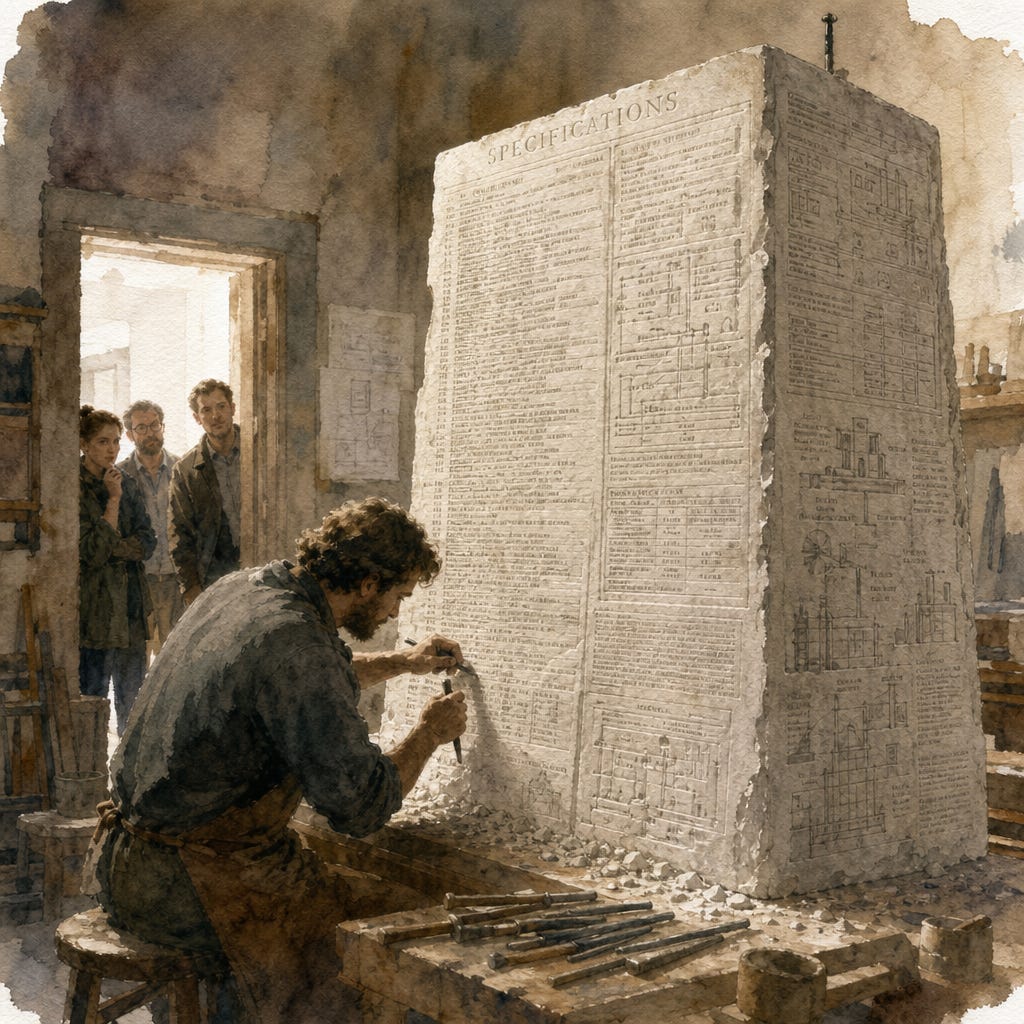
I have a long history of struggling to delegate. Of not asking for help. Of pre-deciding that whoever I’d hand a task to will not meet the unique, more-detailed, more-nuanced specifications I have in my head from my deeper understanding of the subject.
That sentence is, technically, sometimes true. I do know the subject more deeply than most people I’d delegate to. The specs in my head are, in fact, often more detailed than the specs I can articulate. There’s data behind that resignation, too.
But sometimes is doing a lot of work in that sentence. Most of the time, I never give the other person the chance to demonstrate whether they could meet me there. I run the simulation in my head, decide they can’t, and keep the task. Or I write specs so detailed they read as distrust, which produces compliance rather than ownership, which then confirms my prior. Anticipatory carelessness doing its anticipatory thing, dressed up in a project plan.
The pattern in delegation is the pattern in intimacy. Pre-decide the other party can’t bring the resolution. Don’t make the bid. Treat the absence of recognition as proof of incapacity. Sit on the island, feeling like the only one who actually understands what would have made the work good.
I’ve been carrying this at work as long as I’ve been carrying it in my closest relationships. I just hadn’t noticed they were the same architecture.
Real Carelessness vs. Anticipatory Carelessness
Here’s the analytical move that helps me hold both truths.
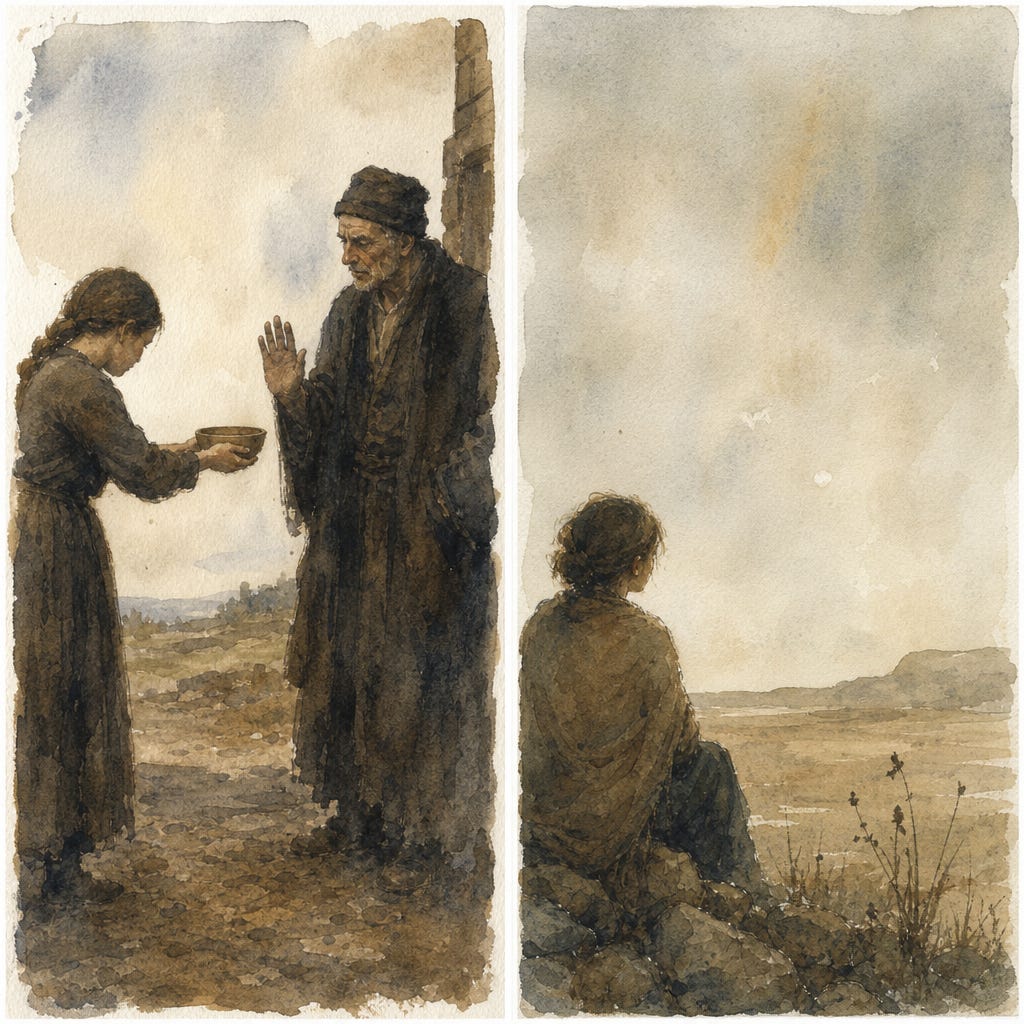
Real carelessness is what happens when someone, given the chance and the curiosity invitation, defaults anyway. They don’t ask. They don’t adjust. They don’t bring the effort the encounter required. The data shows up in their behavior after a real bid was made. That carelessness is theirs to own. The wound that comes from it is legitimate.
Anticipatory carelessness is what I do when I default on them first, refuse to make the bid, and treat the absence of recognition as proof of their incapacity. The data never shows up because I never created the conditions for it to appear. The wound that comes from that one is, partly, mine to own.
Most of the time, both are happening in any given relationship. Some real carelessness, some anticipatory carelessness, braiding together in a way that’s almost impossible to untangle in the moment. But they require different responses. Real carelessness is something to grieve, name, or move away from. Anticipatory carelessness is something to interrupt in myself.
The interruption requires a practice. Which brings me to the part of this article I had to wait to write, because I didn’t know what the practice was until last week.
Legibility Is the Practice
A few weeks ago, I had an appointment with my urologist. She’s the doctor who manages my testosterone replacement therapy and runs my blood work. Routine appointment, the kind where you sit in the chair and she asks if there’s anything new.
I almost didn’t bring it up. I know doctors who dismiss information like what I was about to share, and I’ve been on the receiving end of that dismissal before. The thing that tipped me over was that the stakes were comparatively low. If she dismissed me, I wouldn’t lose a job, a contract, or a bid for affection. I could practice the legibility move with the safety of an exit ramp. Not every relationship offers that.
I told her I’m twice-exceptional. Autistic, gifted, ADHD-Inattentive. I told her I knew this wasn’t on her standard intake form. I explained why I thought it might still be useful to her: I can metabolize deeply technical science about my own health and ask questions at the level of mechanism, and I also routinely forget to administer my own injections twice a week because executive function is what executive function is. I told her this so she’d have the right context for any treatment conversation we’d have, now or later. I didn’t ask her to do anything with it. I just made the information available.
She’d never heard of twice-exceptional before. She thought it was interesting. She went and looked it up between appointments. She brings it up now, naturally, when she’s prescribing or explaining anything about my care.
That is what the bid actually looks like.
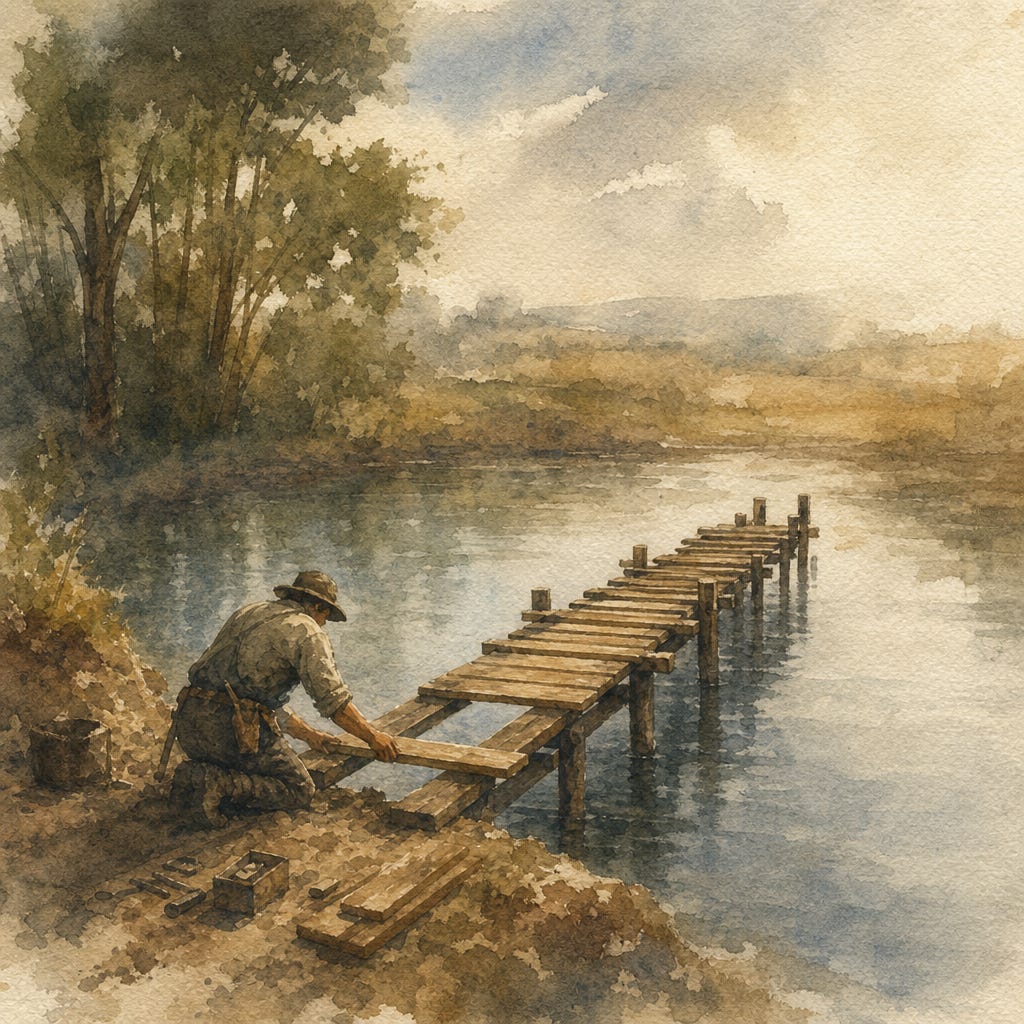
I made myself legible. I did the part of the work that’s mine to do, which is the explaining. I didn’t demand that she figure me out. I didn’t sit on my island wondering why my doctors don’t have a better mental model of me. I built a small, specific bridge from my side and let her decide what to do with it. She walked across it. Some doctors wouldn’t have. The point is that I now have evidence about her, instead of a pre-emptive guess.
This is the practice that resolves anticipatory carelessness. Not demanding to be seen. Not waiting for someone to climb my island. Doing the legibility work first. Making the explanation available, calibrated for the channel and the relationship, with no condition attached to it. Then letting reality respond.
I can’t expect someone to understand me if I haven’t done an adequate job of explaining me and my needs in the first place. That’s the responsibility I didn’t want to face when I was nursing the carelessness wound, because the wound felt clean. They didn’t see me. The fault lived over there. Naming the legibility responsibility means accepting that some of the unseen-ness was my refusal to be seen.
I gave it a name last week. The practice itself goes back to high school.
In high school I bleached the center of my eyebrows blonde. My hair was a mohawk shaped like an M from above: two points up front, each splitting into a pair of mohawks toward the back. My yearbook voted me Most Unique. I didn’t have any vocabulary for what I was doing then, and if you’d asked me, I would have said something teenage about self-expression. The actual mechanism, decades later, looks like this: I was offloading identity to my appearance so people would have less work to do figuring out what they were dealing with. Here. This is who I am. No surprises. The visual served as pre-loaded context. It got read before I opened my mouth. I wrote about this version of the move at more length in Why I Left Facebook (And Why I'm Back With a Link), if you want the longer reframe.
I was also, in those years, the kid who pushed for truth in truth or dare. Most of my friends found truth boring and went straight for the dares. I’d lean in and ask people things like what do you most like about me? or what do you see in me? or who do you think I am? I framed it as a fun party-game move, and it was. It was also a real-time legibility QA pass. The mohawk and the bleached eyebrows broadcast outbound. Truth or dare let me check what got received. Both halves of the loop, running at sixteen, before I had any of the language for what I was doing.
I’m not bleaching my eyebrows at forty-five, and I’m not playing truth or dare either. The tools aren’t right for the job, and the job isn’t quite the same job. The architecture is. Visual legibility at sixteen, verbal legibility at the urologist’s office, structural legibility through this Substack and jonmick.ai. Three different domains, three different toolsets, same underlying broadcast move. The actual work underneath all the channels is identity reconstruction. Legibility is the practice within that work. Writing happens to be the channel I’m using most lately, but the practice doesn’t depend on writing. I’ve been at it for thirty years before I knew the name of the song. The receive side, though. That’s the part I’m still relearning. Sixteen-year-old me had a healthier feedback loop than forty-five-year-old me did until last week.
Charlotte does her version of this, too. She doesn’t demand that I read her perfectly across the gap between our architectures. She builds her own infrastructure to make herself legible to me, in forms her nervous system can survive. I build mine for her. We’ve been doing this all along, and I’ve spent years calling it work-around when the more honest name is mutual legibility under conditions where direct transmission would cost more than either of us has.
My trauma is the small-t kind, developmental and relational, the accumulated cost of growing up neurodivergent in a world that wasn’t built for me. Charlotte has her own to navigate. Whatever the source, trauma teaches a nervous system what feels safe and what doesn’t, and the practices we’ve each built reflect that. We’ve designed legibility that feels safe to our particular nervous systems, not necessarily the healthiest possible version. There’s no failure in this. Nervous systems built around survival do this work however they can, and the practices honor what each of us has actually lived through.
Pala has to be practiced. Person by person, bid by bid. The fragility is not a reason to skip the practice. It’s the reason the practice matters.
Two Disciplines of Recognition

Last week’s article, Some Things You Don’t Say to Strangers (Until You Do), was about the discipline of seeing. The skill of reading people fast is real. So is the calibration required to know when to say what you see, to whom, in what register. There’s a courage in extending high-resolution recognition. There’s also a discipline in withholding it when the channel can’t carry the signal.
This article is the receiving direction of the same architecture. The discipline of being seen begins with making yourself legible. Not everyone will walk across the bridge I build, and most can’t. But the bridge is the bid, and without the bid, the data never comes in, and the wound feeds itself on its own anticipations.
Real carelessness is grievable. Anticipatory carelessness is interruptable. The first I’ll keep meeting, in proportion to how much of the world will never run the resolution my nervous system needs. The second is the developmental edge. Catching myself in the act of pre-deciding that the bridge can’t be built. Building it anyway. Letting reality respond.
Some people will walk across. Some won’t. Both outcomes are information. Both are better than the silence of an island where I sit alone, mistaking my own anticipations for the world’s incapacity.
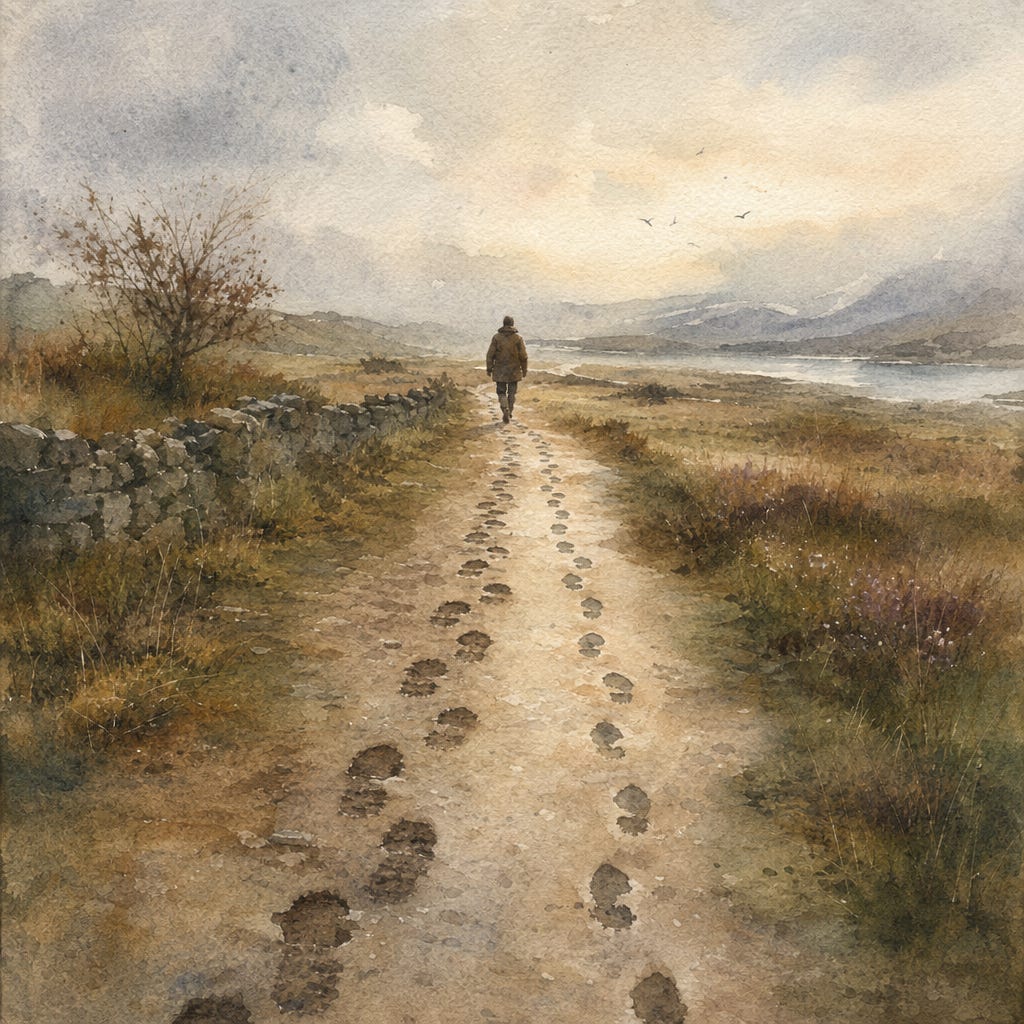
I am going to keep getting this wrong. The protective pattern is decades old, and it isn’t going to dissolve because I named it once in a Substack article. But I noticed it last week in a way I hadn’t before. The Charlotte mirror brought it. The urologist showed me the practice. Gil named the island. Huxley showed me what the island isn’t. The pieces have been sitting around me for months, waiting for me to put them together.
This is the work. The wandering.
Human. Deeply seen.
Outstanding introspection. I can sure relate to a good bit of it (file under Why I Don't Have Friends). You are wise beyond your years, and your insights are greatly appreciated.
Jon, this piece hits so close to home. The expectation of not being met is a protective pattern I keep finding in myself, and it's decades old. I've worked hard on reducing it, but traces do remain. The harder thing I've come to realize is the mirror you describe: I can't always see other people the way they need me to, either. That's usually much more about my own capacity in the moment than about what they're bringing. Thank you for this.